Are There Only 9 EF-Mount Lenses Left In Canon’s Catalog?

canon eos r6 mark iii firmware updates viltrox eos r7 eos r10 reuters canon cameras europe canon eos r1 eos r rf 14-35mm Olympic Games ef-mount rudy winston

We know that Canon is discontinuing EF-mount lenses. It seems it happens at a faster pace than expected.

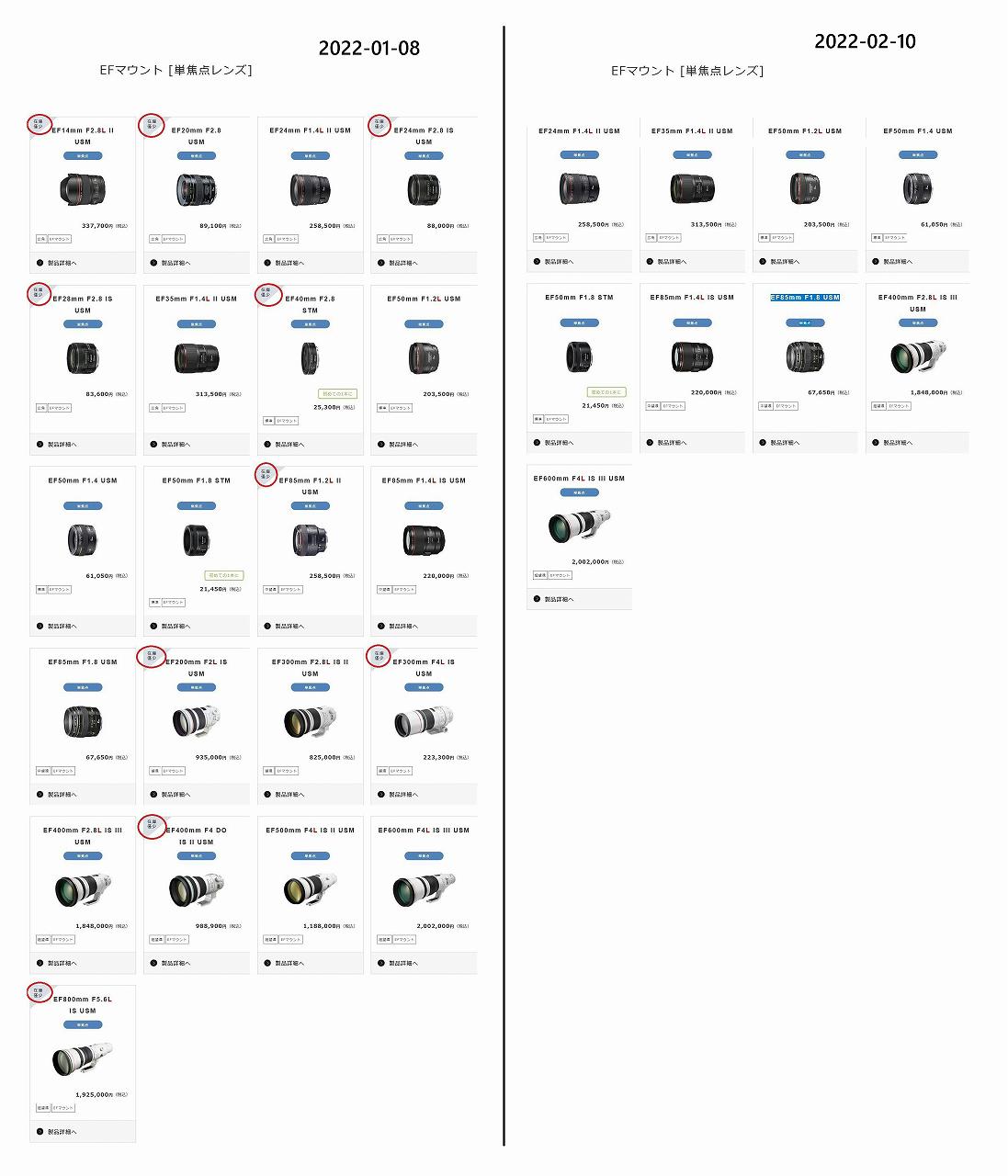
Photographer Kimio Tanaka (@thisistanaka) on Twitter reports that he found out that Canon reduced the EF-mount lineup from 21 lenses to 9 in one month. Have a look at the image below: the lenses circled in red have disappeared in one month, according to Mr. Tanaka. I guess he did his research on the Japanese market but it is likely that it applies globally.

Canon stated clearly that the future is mirrorless, and that they will discontinue EF lenses. Well, it is happening.

Less and lesser EF-mount lenses on offer.

[via asobinet.com]

Canon Patent: 200-500mm f/4 and 300-800mm f/8 Lenses For Full Frame

canon patent

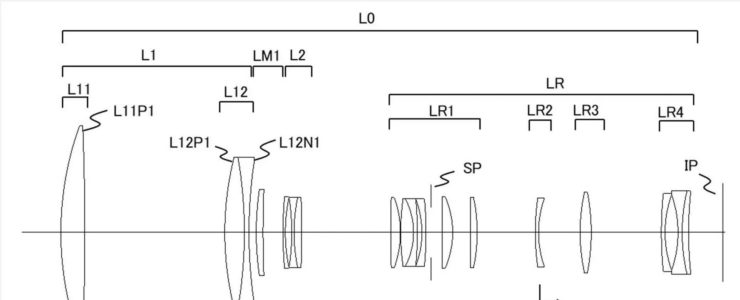
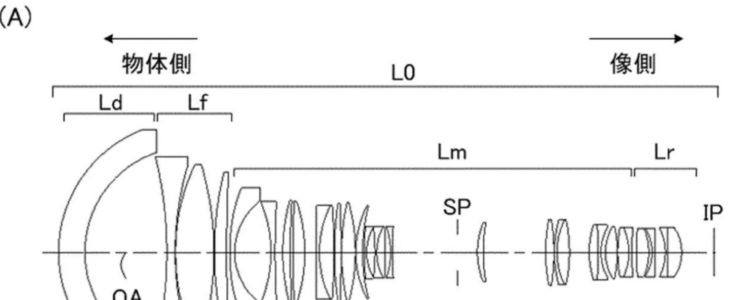
A Canon patent application referring to 200-500mm f/4 and 300-800mm f/8 for full frame sensors, although it is not clear if the lenses for the RF or EF mount.

Canon patent application 2022-26392 (Japan) discusses optical formulas for 200-500mm f/4 and 300-800mm f/8 lenses.

PROBLEM TO BE SOLVED: To provide a zoom lens which has a long focal length and a large aperture ratio, yet has both small size and light weight and high image quality.

Conventionally, a zoom lens has been proposed in which a lens group having a positive refractive power is arranged on the most object side to realize a long focal length and a large diameter ratio (see Patent Documents 1 to 3).

However, a zoom lens having a long focal length at the telephoto end and a small F-number has a large front lens diameter and increases the weight. The zoom lenses of Patent Documents 1 to 3 are insufficient in weight reduction. It is effective to reduce the number of lens components in order to reduce the weight, but if the number of lens components is reduced, it becomes difficult to achieve high image quality.

An object of the present invention is to provide a zoom lens having a long focal length and a large aperture ratio, yet having both small size and light weight and high image quality.

[via asobinet.com]

Canon Patent: Touch-enabled Lens Control Unit (adjust aperture and focus

canon patent

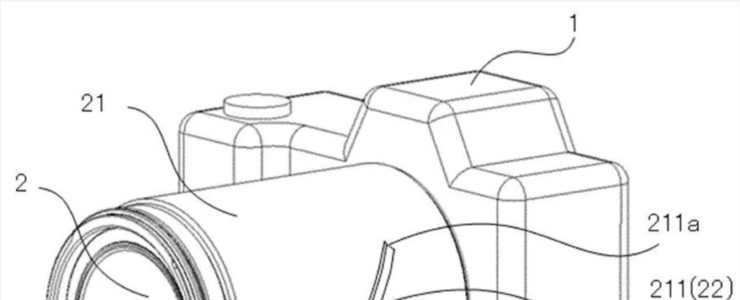
A new day, a new Canon patent application. What about a lens with touch controls?

Canon patent application 2022-25673 (Japan) discusses methods and technology for a touch control on a lens that allows to change aperture and focus.

PROBLEM TO BE SOLVED: To perform continuous smooth touch operation without visually observing an exterior portion of an optical device.

As a lens device (interchangeable lens) with improved user operability, Patent Document 1 describes focusing distance, focal length, aperture value, operation mode, and the like with a finger on any of a plurality of touch areas. Those that can be selected by touch operation are disclosed. This lens device is discretely provided with convex indexes for recognizing the touch region operated by the touch by the sense of touch without the user having to visually check the exterior portion provided with the touch region.

However, although the discrete index disclosed in Patent Document 1 is effective for touching each touch region, it guides a continuous smooth touch operation for a plurality of touch regions in focusing and the like. There is no function.

The optical device as one aspect of the present invention has an exterior portion. The optical device has an operation detection unit having a finite length for detecting the position of a touch operation on the exterior portion, and an operation guide unit provided on the exterior portion to guide a user’s finger performing a touch operation. .. The operation guide unit is characterized by having a shape that extends continuously along the operation detection unit.

This is not the first Canon patent referring to a lens with touch controls. Will the discussed technology ever hit the market?

The Canon patent application was spotted by asobinet.com. More Canon patent applications are listed here. Some particularly interesting patent applications we think might get into production are these:

An Example Of 180° VR Footage Captured With The Canon RF 5.2mm f/2.8L DUAL FISHEYE

canon rf 5.2mm f/2.8L dual fisheye

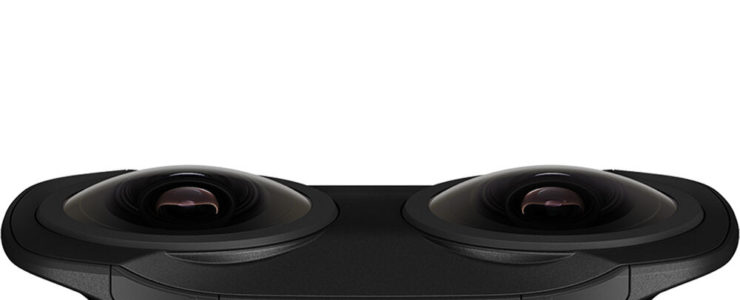
Here is a showcase of what you can produce with the Canon RF 5.2mm f/2.8L Dual Fisheye lens. Even if you don’t have a VR headset you can benefit from the video below.

At a glance:

  • RF-Mount Lens/Full-Frame Format
  • Aperture Range: f/2.8 to f/16
  • Captures Stereoscopic 3D 180° VR imagery
  • Two Ultra-Low Dispersion Elements
  • Super-Spectra & Sub-Wavelength Coatings
  • Fluorine Coating
  • Weather-Sealed Construction
  • 7-Blade Diaphragm

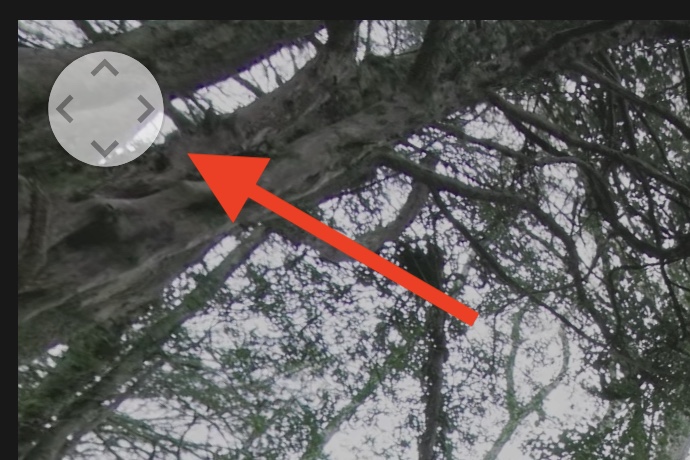
Experience the video through using a VR headset (for a fully immersive and stereoscopic experience), a mobile device or a computer. Don’t miss the small control wheel on top left. By using it you can move around in the video and change perspective (see image below).

The control wheel

An inspirational story captured by VR Director, Mary Matheson and Director of Photography, Richard Stegmann, and posted by Canon Europe. Enjoy.

You can order the Canon RF 5.2mm f/2.8L Dual Fisheye at $1,999: B&H Photo and Adorama. World-wide orders: [shoplist 67558]

Canon RF 5.2mm f/2.8L hands-on videos can be found here. More about the lens after the break.

rf 5.2mm f/2.8L
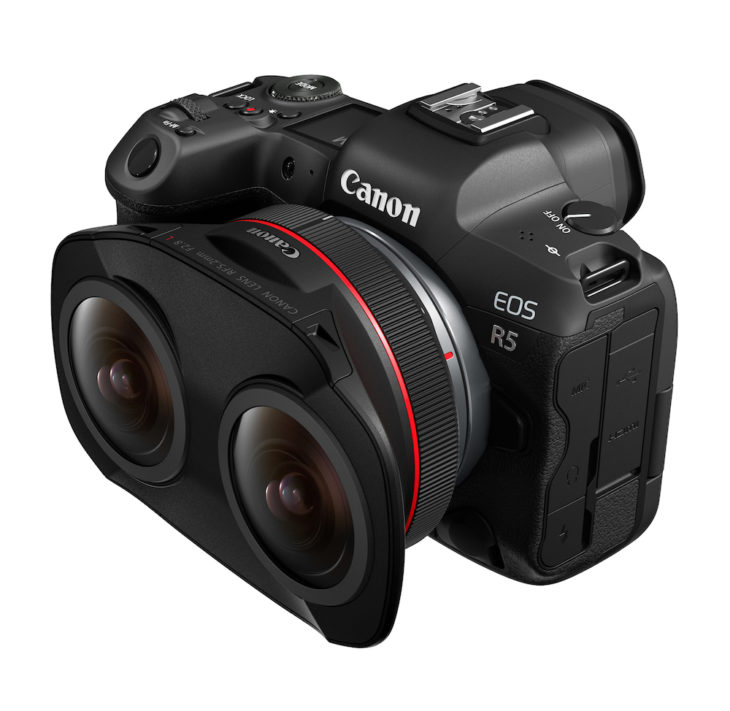
The RF 5.2mm dual fisheye on a Canon EOS R5
Click here to open the rest of the article

Canon Patent: Underwater Attachment Optic For Better Performance

canon patent

Very interesting Canon patent application. If I got it right, it is for a sort of underwater attachment optic you can mount on a telephoto lens. The optical system should deliver an optical underwater performance that’s close to what you get when using the lens on the surface (i.e. in “air”).

Canon patent application 2022-24363 (Japan) discusses technology and optical formulas for an optical filter system that gets mounted on a lens and should deliver much better optical performance under water.

PROBLEM TO BE SOLVED: To provide an attachment optical system capable of obtaining optical performance close to that in the case of use in air when used in water with a simple configuration.

Conventionally, an attachment optical system for mounting on an image pickup lens is known. In recent years, the number of users who enjoy shooting underwater is increasing, and the demand for an image pickup lens optimally designed for underwater use is increasing. Generally, as an underwater camera or an amphibious camera, a camera in which the camera is housed in an underwater housing or a camera in which the camera itself is provided with a waterproof mechanism is used. However, the refractive index and dispersion of water and salt water are different from those in air. For example, the refractive index for the d-line is about 4/3 with respect to air, and the dispersion is about 62 in Abbe number. Therefore, when an image pickup optical system whose aberration is sufficiently corrected in air is used in water, the refraction action at the interface between water and the image pickup optical system changes, and the optical performance deteriorates due to the change in aberration.

When an optical system that has been subjected to aberration correction on the assumption that it is used in air is used in water, the aberration changes as described above. Specifically, it is necessary to extend the focus lens group in order to generate curvature of field on the over side, distortion, and to shift the focus position to the rear of the image plane and return the focus to the image plane position. There is the occurrence of aberration fluctuation due to. Further, the change in aberration becomes more remarkable as the thickness of the housing mounted in front of the optical system becomes thicker when used underwater. With the attachment optical system disclosed in Patent Document 1 and Patent Document 2, it is difficult to cope with all of the above-mentioned changes in aberration, and the optical performance when used in water is close to that when used in air. Cannot be obtained.

Therefore, the present invention presents an attachment optical system, an optical system, and a method for manufacturing an optical system, which can obtain optical performance close to that of use in air when used in water with a simple configuration. The purpose is to provide.

The attachment optical system as one aspect of the present invention has a first converter optical system that can be attached to the object side of the image pickup optical system, and the first converter optical system has a dome-shaped cover. It has one unit and a second unit composed of a plurality of lenses, and the second unit has a negative refractive power arranged at a position closest to the first unit in the second unit. The focal length fd of the first unit, the focal length ffc of the second unit, and the focal length fn of the lens having a negative refractive power in the second unit in water having a lens are predetermined conditional expressions. To be satisfied.

asobinet.com suggests this is for movie application and less for stills photography. They also suggest it is for a zoom lens for the Canon EOS Cinema system.

Nikon Z9 vs Canon R3 Hands-On Comparison Review

eos r3 vs nikon z9

Want to know how the Nikon Z9 and the Canon EOS R3 compare? Both are the current top-of-the-line full frame mirrorless offerings from the respective companies. Here is a Nikon Z9 vs Canon R3 hands-on review.

At a glance:

Canon EOS R3Nikon Z9
  • 24MP Full-Frame Stacked BSI CMOS Sensor
  • Dual Pixel CMOS AF II, Eye Control AF
  • 6K60 Raw and 4K120 10-Bit Internal Video
  • 30 fps E. Shutter, 12 fps Mech. Shutter
  • 5.76m-Dot EVF with 120 fps Refresh Rate
  • 3.2″ 4.2m-Dot Vari-Angle Touchscreen LCD
  • Sensor-Shift 5-Axis Image Stabilization
  • Multi-Function Shoe, Built-In Vert. Grip
  • CFexpress & SD UHS-II Memory Card Slots
  • Wired LAN and 5 GHz Wi-Fi Support
  • 45.7MP FX-Format Stacked CMOS Sensor
  • EXPEED 7 Image Processor
  • 8K30p and 4K120p Video, 10-Bit Internal
  • Up to 20 fps Raw, 30 fps JPEG Shooting
  • 493-Point Phase-Detection AF System
  • AI-Based Subject Detection and Tracking
  • Blackout-Free Real Live Viewfinder
  • 3.2″ 4-Axis Tilting Touchscreen LCD
  • Vertical Grip, 2x CFexpress Type B Slots
  • 5 GHz Wi-Fi, Bluetooth, and GNSS

Manny Ortiz and Dan Watson compare the Canon EOS R3 with the Nikon Z9 in the 10 minutes hands-on review below. Enjoy.

Our Canon EOS R3 coverage is listed here. More comparison reviews are listed here.