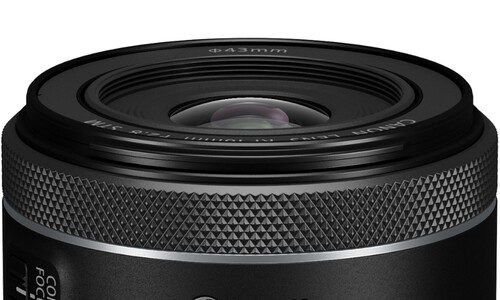
Here is a Canon RF 16mm F2.8 STM review in video format. This seems to be a little and affordable lens ($279( that is getting lots of positive reviews.
At a glance:
RF-Mount Lens/Full-Frame Format
Aperture Range: f/2.8 to f/22
One Aspherical Element
Super Spectra Coating
STM Stepping AF Motor
Customizable Control Ring
Rounded 7-Blade Diaphragm
DPReview TV posted their Canon RF 16mm F2.8 STM review. You can watch it in the video below. They say (emphasis mine):
When it was first announced, we were surprised by how small and affordable the Canon RF 16mm F2.8 STM was. Ever since, we’ve wanted to try one out and we finally had a chance! Canon’s RF mount may boast plenty of fancy, expensive optics, but this might be one of the most exciting lenses in the system.
New Canon firmware for four cameras has been released. I found it on Canon Japan’s site and hence I am linking it because it’s not available yet on the Canon USA or EU sites (will be later on).
I never get tired to repeat it: the best Canon deals are to be found in the Canon Store’s refurbished gear listings. Canon just restocked it.
All refurbished gear sold in the Canon Store comes with Canon warranty, and is absolutely trustworthy. Have a look at these listings, and don’t be surprised if the best deals are gone – they never last long.
An example: The refurbished Canon EOS 6D Mark II is on sale at $1,259.
Check all refurbished and discounted offerings here:
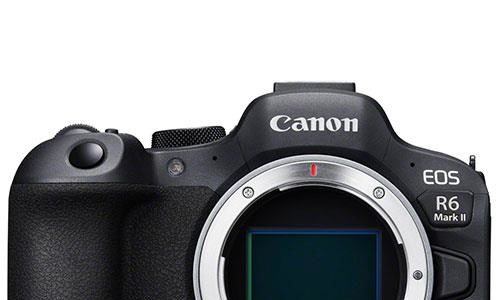
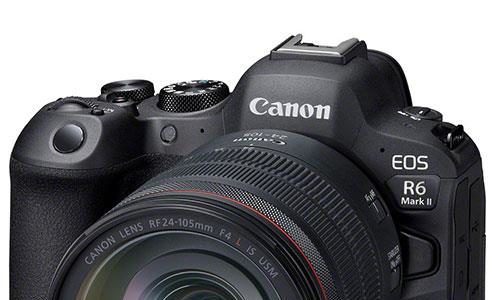
Here is an exhaustive Canon EOS R6 Mark II review.
At a glance:
24.2MP Full-Frame CMOS Sensor
4K60 10-Bit Internal Video, C-Log 3
External 6K ProRes RAW Recording
Dual Pixel CMOS AF II
12 fps Mech. Shutter, 40 fps E. Shutter
Sensor-Shift 5-Axis Image Stabilization
3.69m-Dot OLED EVF
3″ 1.62m-Dot Vari-Angle Touchscreen LCD
Dual UHS-II Memory Card Slots
Multi-Function Shoe, Wi-Fi and Bluetooth
DPReview posted their full Canon EOS R6 Mark II review. They gave it a Gold Award and a 91/100 score. From their conclusion:
The feature that really sets it apart from its contemporaries is its ability to shoot at up to 40fps and to pre-buffer bursts, to help you capture the key moment. Its rolling shutter means these modes aren’t ideal for capturing very fast movement, but it’s good enough to be genuinely useful. It doesn’t suddenly make it a mini EOS R3, but it further expands the types of photography the R6 II can accommodate.
Quite apart from the specs and capabilities, the EOS R6 II is simply a very nice camera to use. Its menus are long, but its grip is comfortable, its controls well placed, and a great deal of consideration has clearly been given to how many control points it needs. It feels like a well-honed tool, refined by people who’ve spent a lot of time using cameras.
[…]
Overall, though, it’s a camera that impresses every time you use it and, up against some of the best cameras you can buy, that counts for a lot.
[there might be] unavoidable problems with the image quality of the photos. For example, noise that makes a photo look grainy, moiré that makes a moire pattern that should not exist, and blurring of an image caused by the principle of a lens. There were times when information was reflected. When a wide-angle lens is used, the image quality in the peripheral areas off the center of the lens tends to be blurred due to the deterioration of the optical performance of the lens.
As AI technology advances and deep learning technology is being applied in a variety of ways, Canon, as a leading company with extensive knowledge of cameras and lenses, is committed to the inevitability of the principle of photography. In order to solve this problem, he directly tackled the development of deep learning image processing technology himself.
So, how does Canon’s AI technology work?
Canon’s deep-learning image processing technology, aimed at achieving true-to-life photography, covers three areas: noise reduction, color interpolation, and aberration diffraction correction (lens blur correction). Both areas have so far been regarded as problems in principle.
In the first place, the key to achieving high accuracy in the results of deep learning image processing technology is how many pairs of “teacher images” and “student images” (=learning data) can be prepared. Canon has a huge image database that has been accumulated through the development of cameras and lenses so far, covering all imaginable subjects, and storing RAW data with more detailed information such as JPEG. increase. In addition, we were able to collect a large amount of ideal training data using the camera manufacturer’s unique know-how, which is well-versed in how camera settings affect image quality.
Curious? Then have a look here (it’s machine translated but well understandable).
This website or its third-party tools use cookies, which are necessary to its functioning and required to achieve the purposes illustrated in the cookie policy. If you want to know more or withdraw your consent to all or some of the cookies, please refer to the cookie policy. By closing this banner you agree to the use of cookies.