Cosina Will Soon Announce A Nokton 50mm f/1 For The RF Mount

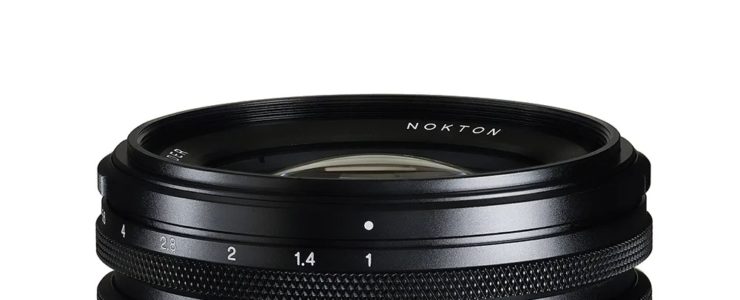
NOKTON 50mm f/1

Good news for those looking to an ultra-fast prime lens for the EOS R camera system. A NOKTON 50mm f/1 aspherical lens is coming.

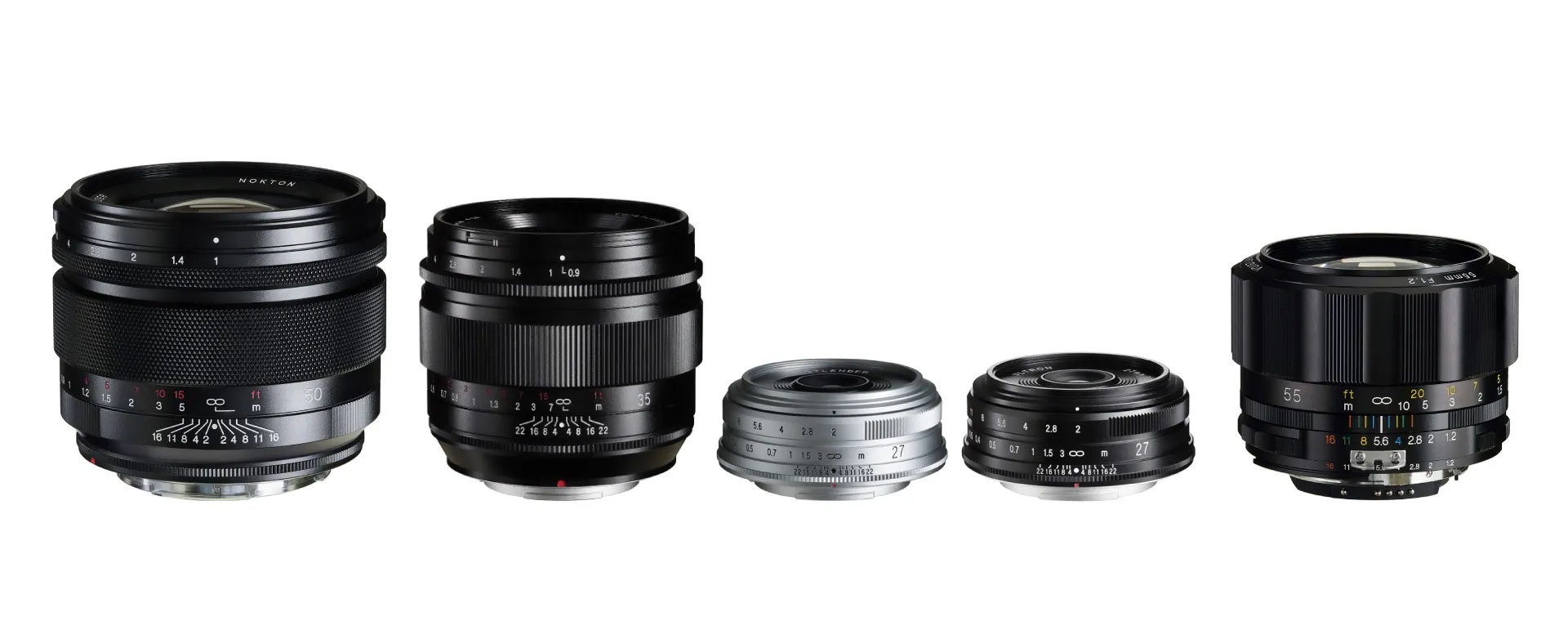
Cosina will soon release a NOKTON RF 50mm f/1 aspherical lens, along with other new prime lenses. Indeed, we expect 5 new lenses, these:

  • NOKTON 50mm F1 Aspherical RF-mount
  • NOKTON 35mm F0.9 Aspherical X-mount
  • NOKTON 55mm F1.2 SLIIs
  • ULTRON 27mm F2 X-mount Black
  • ULTRON 27mm F2 X-mount Silver

Here are the specifications for the NOKTON 50mm f/1 (thanks Mistral75):

Focal length50mm
Maximum aperture1:1
Minimum apertureF16
Lens configuration7 groups 9 elements
Angle of view48.0°
Number of diaphragm blades12
Shortest shooting distance0.45m
Maximum shooting magnification1:6.9
Maximum diameter x total lengthΦ79.3×64.0mm
Filter sizeΦ67mm
Weight650g
Lens hoodDedicated screw-in hood included
Aperture ringEquipped (manual aperture)
Electronic contactsAvailable
Exif informationCorrespondence
OtherSelective Aperture Control System

No specifications so far. All we know for the time being is that the new Cosina lenses will have electrical contacts to communicate with the camera. Moreover, a mechanical system is used for aperture interlocking, and an aperture switching mechanism for moving images is also present.

All upcoming Cosina lenses pictured below, click to enlarge.

[via Digicame-Info]

The Canon EOS R5 Mark II Might Get Announced Before The EOS R1

canon rumors canon news eos r7 mark ii canon eos rv

A new rumor surfaced from the interweb of rumor mills. A bit strange, though. The Canon EOS R5 Mark II might get announced before the long rumored EOS R1.

The source of the rumor states that the Canon EOS R5 Mark II…:

[…] will likely arrive before the Canon EOS R1

The rumored specifications for the Canon EOS R5 Mark II are these:

  • New 61MP CMOS BSI sensor
  • Dual DIGIC X processor
  • 30 FPS electronic shutter with tracking / 12 FPS mechanical shutter
  • Same 8-stop IBIS
  • New High Resolution mode similar to pixel shift shooting found on Sony/Fujifilm
  • 2x/4x/8x digital tele-convertor
  • Same Dual Pixel CMOS AF II from EOS R3 and EOS R6 Mark II
  • Internal 8K 60p video recording (8K RAW video spec to be confirmed)
  • Internal 4K 30p/60p/120p video recording (all by oversampling)
  • FHD 240p video recording
  • Focus breathing correction for video
  • New overheat prevention design similar to EOS R6 Mark II, at least 40min for 8K video, and over
  • 60 min for 4K video
  • Dual CFexpress type B card slot
  • Standard HDMI port
  • Dual USB-C port
  • 9.44M-dot EVF
  • New design of vari-angle LCD monitor optimized for video shooting

You better take this all with a reasonable amount of salt. I’d not bet my money on it, neither the specifications nor the announcement.

Stay tuned.

[via Canon Rumors]

Canon EOS R6 Mark II Review (for photography)

canon EOS R6 Mark II review

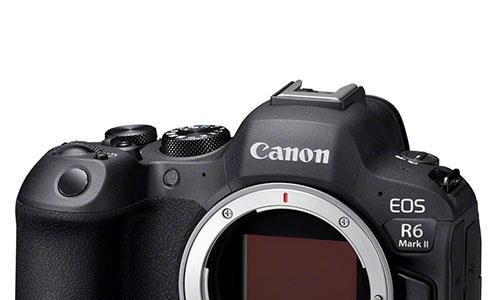
Here is a Canon EOS R6 Mark II review by a highly regarded reviewer. How does the second iteration of the R6 perform?

At a glance:

  • 24.2MP Full-Frame CMOS Sensor
  • 4K60 10-Bit Internal Video, C-Log 3
  • External 6K ProRes RAW Recording
  • Dual Pixel CMOS AF II
  • 12 fps Mech. Shutter, 40 fps E. Shutter
  • Sensor-Shift 5-Axis Image Stabilization
  • 3.69m-Dot OLED EVF
  • 3″ 1.62m-Dot Vari-Angle Touchscreen LCD
  • Dual UHS-II Memory Card Slots
  • Multi-Function Shoe, Wi-Fi and Bluetooth

Gordon Laing posted his exhaustive Canon EOS R6 Mark II review. Here it is for your viewing pleasure.

More Canon EOS R6 Mark II coverage is listed here.

Canon EOS R6 Mark II world wide orders: [shoplist 70314]

Click here to open the rest of the article

Canon Patent For Box-shaped Camera Body (Cinema EOS?)

canon patent

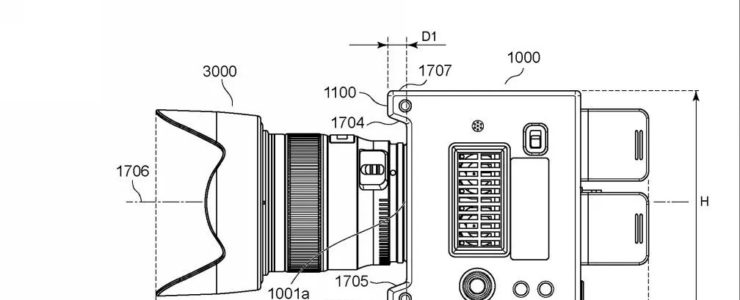
Rather interesting Canon patent application. A box-shaped interchangeable lens camera.

Canon patent application 2023024538 (Japan, published 2/16/2023) discusses methods and technology for a box-shaped camera (or a protection for a box-shaped camera?).

From the patent literature:

A camera mount protection when a lens is removed from an imaging device with a detachable lens.

Description of the Related Art

A lens-exchangeable imaging apparatus is known in which a lens device can be attached to and detached from a mount formed on the front surface of a camera body. Also, interchangeable-lens imaging devices with a very short distance from the lens mount to the image sensor have appeared, such as so-called mirrorless cameras that do not have a reflecting mirror to guide the incident light of the lens device to the optical viewfinder.

Further, some interchangeable-lens imaging apparatuses have a tripod or a seat on a plurality of side surfaces of the camera body, and are capable of vertical shooting or upside-down shooting. Patent Literature 1 discloses a camera having a mounting surface and a tripod mount on the top surface. Or you can shoot with the camera fixed upside down on the gimbal.

In Patent Document 1, the lens mount protrudes from the camera body when the camera is viewed from the front side. Therefore, if the camera is placed with the mount surface facing downward while the lens device is removed from the camera body, the mount surface may be damaged.

In addition, when a large lens device is attached to the camera body, the center of gravity of the camera as a whole is shifted forward from the tipping limit, and there is a concern that the camera may topple forward. This is especially noticeable when the camera body is made smaller and lighter, such as with a mirrorless mount.

SUMMARY OF THE INVENTION

It is an object of the present invention to provide an image pickup device capable of protecting the mount of the image pickup device when the lens is removed.

More Canon patent applications are listed here

[via asobinet]

This Camera Has Been Reduced To The Size Of A Salt Grain

camera

Researchers at Princeton University and the University of Washington have presented a camera with the size of a salt grain.

The researchers…

[…] have overcome these obstacles with an ultracompact camera the size of a coarse grain of salt. The new system can produce crisp, full-color images on par with a conventional compound camera lens 500,000 times larger in volume, the researchers reported in a paper published Nov. 29 in Nature Communications.

Enabled by a joint design of the camera’s hardware and computational processing, the system could enable minimally invasive endoscopy with medical robots to diagnose and treat diseases, and improve imaging for other robots with size and weight constraints. Arrays of thousands of such cameras could be used for full-scene sensing, turning surfaces into cameras.

A key innovation in the camera’s creation was the integrated design of the optical surface and the signal processing algorithms that produce the image. This boosted the camera’s performance in natural light conditions, in contrast to previous metasurface cameras that required the pure laser light of a laboratory or other ideal conditions to produce high-quality images, said Felix Heide, the study’s senior author and an assistant professor of computer science at Princeton.

Read more about the camera reduced to the size of a salt grain here.

Luminar NEO Is One Year Old, Offers Promotions For Its Birthday

luminar neo

Skylum’s Luminar NEO is one year old and to celebrate the company offers some promotional packets.

To celebrate the one year anniversary of Luminar NEO, Skylum offers these promotional packets:

  • Annual Explore subscription – 99 $/€ (119)/year + 1 year free + Creative Anniversary Collection
  • Monthly Explore subscription – 9.95 $/€ /month + 1 month free + Creative Anniversary Collection
  • Annual Pro subscription – 119 $/€ (149)/year + 1 year free + Creative Anniversary Collection
  • Monthly Pro subscription – 14.95 $/€ /month + 1 month free + Creative Anniversary Collection
  • Luminar Neo Lifetime purchase – 149 $/€ (199) + Magic Light extension for free + Creative Anniversary Collection

You can access all Luminar NEO promotions here.

More selected deals: