Skylum Announces LuminarAI, A Novel Way To Edit Photos With Artificial Intelligence
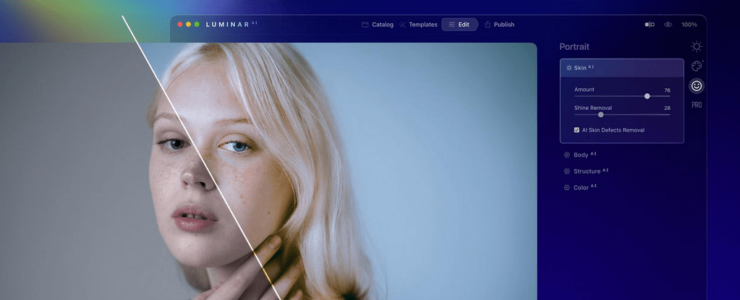
luninarai

Skylum announced LuminarAI, the “first image editor fully powered by artificial Intelligence“. If you want you can preorder LuninarAI at the special price of $69 (limited time). Learn more about LuminarAI here.

Press release:

Skylum aims to reinvent traditional photo editing, announces LuminarAI

LuminarAI empowers visual communicators to make great photos with unique AI. Everyone can create amazing images faster while having fun.

NEW YORK, NY – September 3, 2020​ —​ ​This morning, Skylum unveiled a revolutionary approach to photoediting, LuminarA​I​.​​ Unlike other photo editors that takea time-consuming approach based on tools, LuminarA​I ​focuses on results. This revolutionary application and plug-in will be released this holiday season.

LuminarA​I makes complex editing easier than ever before thanks to unique AI-powered tools. LuminarA​I removes boring and complex tasks without sacrificing professional quality. Artificial intelligence lets the visual artist focus on results and not the process. Everyone can make amazing photos free of complexity, yet full of creativity, thanks to artificial intelligence.“

LuminarA​I​ will bring an entirely new,non-conventional approach to the world of photo editing, focusing on the results instead of the process,” said D​ima Sytnik, CPO of Skylum​. “We’ve designed LuminarA​I​from the ground up to change how people interact with their images. We’re really excited to see what Luminar​AI​ can do for creatives everywhere.”

LuminarA​I is designed for visual communicators, every day people and professional photographers alike. It’s made for those who rely on pictures to communicate their important messages and grow their opportunities or reputation: Bloggers, entrepreneurs, educators, marketers, small and medium-sized businesses, and many others. It lets everyone tell their story with rich and expressive images like never before. With LuminarA​I everyone can make amazing images in an efficient way.

Artificial intelligence is the core of LuminarA​I

Compared to traditional image editors, LuminarA​I​offers acompletely different approach. Built from the ground up to leverage artificial intelligence, LuminarA​I ​simplifies complex tasks and removes boring manual work.

Portraits take on new life​.

  • Use​ BodyA​I ​and ​FaceA​I ​to gently sculpt and refine a portrait.
  • Create eyes that are rich and expressive with ​IrisA​I​.
  • Remove blemishes and imperfections naturally with ​SkinA​I​.

Landscape photography has never looked better.

  • Add depth and detail to skies with ​AtmosphereA​I ​and SkyEnhancer​.
  • Transform a photo and add an all-new sky in seconds with​ SkyAI
  • Bring warmth with ​Golden Hour​ or even enhance the sun with ​Sunrays.​

Professional finishing with less hassle.

  • Looking for more detail and texture? Then​ StructureA​I​ is the perfect addition.
  • Get the perfect crop with​ CompositionA​I ​and fix crooked images
  • With AccentA​I​, a photo has perfect exposure and color.

With LuminarA​I​, amazing photos are just two clicks away.

Click here to open the rest of the article

You Can Now Upload Photos From Your Canon Camera To Google Photo

google photo

Good news for those who don’t want to mess around with cables or think about photo transfer or even worse backups at all.

You can now upload photos from your Canon camera to Google Photos by using the image.canon app for Android and iOS. From Google:

If you own a DSLR or point-and-shoot camera, you know that getting your photos backed up can be a process. You often need cables or adapters to take them off of your camera or SD card and save them, and it might take a number of steps to get it all done. We’ve worked with Canon so you can easily upload the moments captured on your Canon devices directly to Google Photos over Wi-Fi—no plugging in your camera or taking out your SD card. 

Compatible Canon cameras are listed here.

However, there are some caveats. First, you need a subscription to Google One to use the service. Next, we do not recommend it because of privacy concerns (what can Google do with your images?). Your mileage might vary.

[via PetaPixel]

Canon EOS-1D X Mark III Firmware Released, Enhances Eye AF & Improvements

canon eos-1d x mark iii firmware

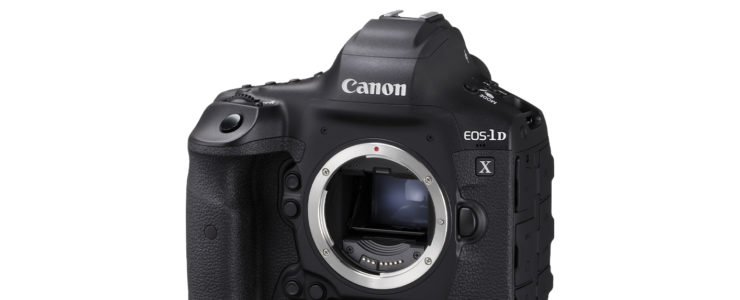
Here is a firmware release we missed. Canon EOS-1D X Mark III firmware 1.2.0.

The firmware update delivers the following:

  1. Enhancements when using Browser Remote:
  • The image list displayed will be refreshed automatically on the browser.
  • On the shooting screen of the browser, you can set the movie resolution and a high frame rate.
  • On the shooting screen of the browser, you can change the movie shooting mode.
  • On the shooting screen of the browser, Live View will be displayed as soon as you select the movie shooting button.
  1. Enhances Auto Focus (AF) for improved face and eye recognition at greater distances.
  2. Fixes a phenomenon that may occur during viewfinder shooting, in which the shutter may not be released or the camera may not operate in the following settings:
  • In One-Shot AF mode, when the AF Area Selection Mode is set as Zone AF, Large Zone AF or Automatic Selection AF.
  • In AI Servo AF, when direct AF point selection is made using the smart controller.
  • When the Register/Recall Shooting Function is assigned to the AE Lock button, in the Custom Controls.
  1. Connectivity during FTP transmission, has been improved.
  2. Improves Wi-Fi connectivity when using the Wireless File Transmitter WFT-E9.
  3. Fixes a phenomenon, in which the card access time may take longer, when using certain CFexpress cards.

Canon EOS-1D X Mark III firmware 1.2.0 download at Canon UK.

Canon EOS R5 Firmware Update Release, Increases Recording Times

canon EOS R5 Firmware Update sony a7s iii

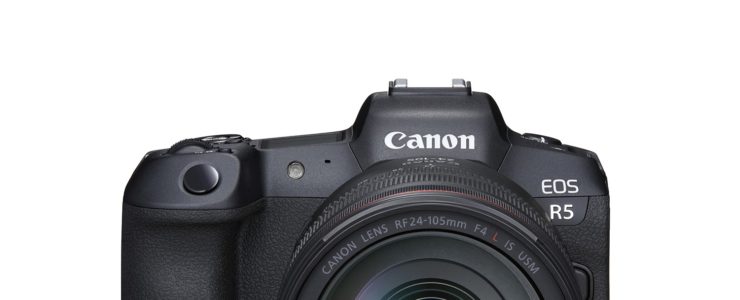
Canon EOS R5 firmware update 1.1.0 has been released. Will it stop the overheating soap opera? Likely not.

Canon EOS R5 firmware 1.1.0 (download) delivers the following improvements and fixes (emphasis added):

  1. Useful messaging is now displayed when [HDMI display: Camera+External monitor] and [Overheat control: on] settings are enabled.
  2. When using certain RF lenses for movie shooting, the in-lens image stabilization mechanism has been improved.
  3. Fixes a phenomenon in which the “Slow Synchro” setting screen is not accurately displayed, when the language is set to English.
  4. Fixes a typo displayed on the communication setting screen, when the language is set to Korean.
  5. Connectivity during FTP transmission has been improved.
  6. Fixes a phenomenon, in which the card access time may take longer, when using certain CFexpress cards.
  7. Temperature detection and shooting time control in video shooting have been improved. In addition, the total shooting time when the short-time recording and power-on/off are performed repeatedly at room temperature is improved.
  8. The phenomenon in which the movie recording time available is not correctly displayed when the Date/Time/Zone is not set has been corrected.

You can download the firmware update from Canon UK.

At the beginning of September Canon will also release a firmware update for the R F100-500mm F4.5-7.1 L IS:

The firmware scheduled for release in early September will incorporate the following improvements for the RF100-500mm F4.5-7.1 L IS USM.

  • Supports 6-stop image stabilization. (CIPA-compliant)
  • Improves IS capabilities when performing continuous shooting under specific conditions.

Without any doubt the change in temperatire detection and management is the biggest change with this firmware. The video below, by Gordon Laing, explains very well what comes with Canon EOS R5 firmware 1.1.0.

Want to learn the latest about the Canon EOS R5 overheating soap opera? Have a look here. Strangely enough, the almost exploding and finger-burning EOS R5 is the best selling camera in Japan.

Whatever, the EOS R5 seems to be highly regarded as a stills camera. In particular, the EOS R5 autofocus system seems to be huge leap forwards. More Canon EOS R5 review stuff is listed here, for the EOS R6 see here. User manual are available for download for the EOS R5 and the EOS R6. My opinion about the EOS R5 overheating hysteria is listed here.

Canon EOS R5 body and kits preorder links: [shoplist 62744]

Latest News From The Canon EOS R5 Overheating Soap Opera

canon rumors Canon EOS R5c

It’s a weird world, it really is.

Let’s say you are a camera manufacturer and you launched a totally innovative camera. A game changer, to be clear.

Now, this camera is packed with innovative features and has some rather advanced video modes, as for instance a 4K@120 slow motion mode. Since you are a serious manufacturer you clearly and transparently document the recording times one can get with the advanced video modes. You know, a lot of heat gets produced when computing 4K and 8K videos. Since you do not want to break the camera you made, you put some necessary recording time limits for the advanced video modes to safeguard the circuits and electronics. And so far all is good.

But then, an army of trolls that breath and live technology and cinematography decides to test these video recording times, and they find out you have been totally honest and clear when stating them. This makes them very, very, very angry and they start to hate you because your camera can’t break the laws of physics and because it still is better than anything they have seen so far. And now you’re at the center of a s**t storm and you can’t help but wonder who the hell needs to make a slow motion video that lasts more than 20 minutes. Hell, you don’t know. Neither do the trolls.

It’s a soap opera, isn’t it? All those people fighting for clicks.

We will not feature the most exalted people here. You won’t have a hard time to find them if you really want. What follows is a bunch of links and videos of people who deal with and discuss the EOS R5 overheating drama, each in his own way and with his own claims.

Someone who went for a truly hackerish way to see what it is about the EOS R5 is Math Class on Baidu. He already tore down the EOS R5 and found some interesting things. Kudos!

Then there is the Scotch tape hack, already posted but featured here again.


Tony & Chelsea Northrup have their own ideas and opinions about the EOS R5 overheating drama.


And so does No Life too:


I do not know what to think about Theoria Apophasis and his theories about a silent EOS R5 recall by Canon. Sounds rather unrealistic to me, not to call it else.


Armando Ferreira is set to tell you the TRUTH about OVERHEATING on the EOS R5.


And finally, here is another hack, this time by Matt Granger.

Still want more? Here is a YouTube listing for the EOS R5 overheating drama. Strangely enough, the almost exploding and finger-burning EOS R5 is the best selling camera in Japan.

The EOS R5 seems to be highly regarded as a stills camera. In particular, the EOS R5 autofocus system seems to be huge leap forwards. More Canon EOS R5 review stuff is listed here, for the EOS R6 see here. User manual are available for download for the EOS R5 and the EOS R6. My opinion about the EOS R5 overheating hysteria is listed here.

Canon EOS R5 body and kits preorder links: [shoplist 62744]

Canon Develops Another Image Sensor That Can See In The Dark (0.08 lux!)

canon

Canon’ research labs are continuously pushing the technological evolution of image sensors. Here is another one.

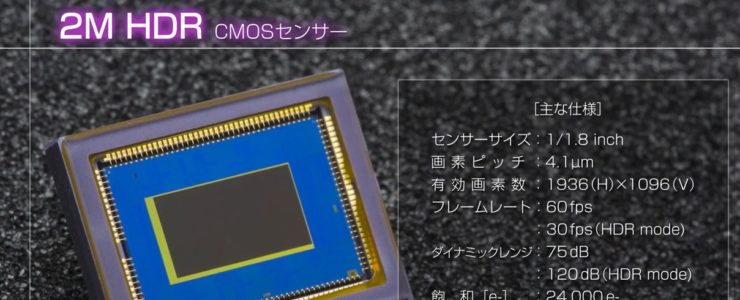
Spotted by Image Sensors World, and none else despite what it might seem, the Canon LI7050 is a new high-sensitivity CMOS sensor for network and industrial cameras that enables full-HD color video capture in 0.08 lux environments. Not bad, eh?

The Canon LI7050 is a specialized image sensor for industrial and other scientific applications. Another Canon sensor that can see in the dark, According to the experts at Image Sensors World:

Despite a compact pixel array of 1/1.8 inches and pixel size of 4.1 µm, Canon’s newly developed LI7050 sensor makes possible color video recording in low-light environments as dark as 0.08 lux.

Security cameras equipped with the LI7050 can capture video at night in such locations as public facilities, roads or transport networks, thereby helping to identify details including the color of vehicles or subjects’ clothing. What’s more, this compact, high-sensitivity sensor can be installed in cameras for such use cases as underwater drones, microscopes and wearable cameras for security personnel.

Canon’s new sensor is also equipped with an HDR drive function that realizes a wide DR of 120 dB. When recording in an environment with illumination levels between, for example, 0.08 lux and 80,000 lux, the sensor’s wide dynamic range enables video capture without blown-out whites and crushed blacks. During normal drive operation, the sensor realizes a noise level of 75 dB and captures video without blown-out whites and crushed blacks in environments with illumination levels between, for example, 0.08 lux and 500 lux.

Is there already someone claiming the sensor is overheating? If not, here is a video showing of the capabilities of this sensor. We think it’s impressing.

If you want to learn more about these highly specialized image sensors have a look at this listing.

Canon press release:

SINGAPORE, 3 August 2020 — Canon announced today the launch in Japan of the LI7050, a new 1/1.8-inch CMOS sensor capable of capturing color images in full-HD even in low-illumination environments as dark as 0.08 lux1.

The recent growth of IoT technologies has in turn generated increasing demand for network and industrial-use cameras—in particular, cameras capable of image capture in full-HD as well as nighttime color recording. Despite a compact body size of 1/1.8 inches and pixel size of 4.1 µm (micrometers), Canon’s newly developed LI7050 sensor makes possible color video recording in full-HD, even under low-light conditions.

The LI7050, while achieving a compact size, features a pixel architecture that enables high sensitivity, thereby making possible low-noise, full-HD color video recording in low-light environments as dark as 0.08 lux. Conventional nighttime monitoring employs infrared cameras and records video in monochrome. However, network cameras equipped with the LI7050 can capture video at night in such locations as public facilities, roads or transport networks, thereby helping to identify details including the color of vehicles or subjects’ clothing. What’s more, this compact, high-sensitivity sensor can be installed in cameras for such use cases as underwater drones, microscopes and wearable cameras for security personnel.

Canon’s new sensor is also equipped with an HDR drive function that realizes a wide dynamic range of 120 dB. When recording in an environment with illumination levels between, for example, 0.08 lux and 80,000 lux, the sensor’s wide dynamic range enables video capture without blown-out whites and crushed blacks. Thanks to this capability, the sensor enables cameras to record high-quality video, even when positioned at building entrances and other locations where there are significant variations in illumination levels. During normal drive operation, the sensor realizes a noise level of 75 dB and captures video without blown-out whites and crushed blacks in environments with illumination levels between, for example, 0.08 lux and 500 lux.
​​​​​​​
​​​​​​​The LI7050 supports the MIPI CSI-2 interface utilized by a wide range of consumer and industrial-use cameras, thereby greatly expanding the number of possible equipment combinations. The sensor also meets a variety of industrial needs through such features as a Region of Interest (ROI) function that enables users to select regions to read from the sensor, reducing the amount of read information and allowing for image capture at an increased framerate, and the ability to configure horizontal and vertical inversion directly from the sensor for easy viewing of footage from cameras installed on ceilings and other inverted positions.
​​​​​​​
​​​​​​​Canon has begun sample shipments of the LI7050 from today, and is scheduled to officially commence sales in late October 2020.