Sony Announces The ZV-E1, Full-frame Camera For Content Creators

ZV-E1

Sony released a full frame mirrorless camera, the Sony ZV-E1, aimed at the video making folks.

Sony ZV-E1 at a glance:

  • Designed for Content Creators
  • 12MP Full-Frame Exmor R CMOS Sensor
  • UHD 4K 120p / FHD 240p / 10-Bit 4:2:2
  • 5-Axis SteadyShot Image Stabilization
  • 15+ Stops Dynamic Range, AI Auto-Framing
  • Multi-Face Recognition, Time-Lapse
  • Product Showcase Setting
  • S-Log3, S-Gamut3, S-Cinetone, User LUTs
  • Extended ISO 80-409,600
  • Internal Mic + Inputs, USB Streaming

Sony press release:

Sony Electronics Announces the ZV-E1, a New Full-Frame, Interchangeable Lens Camera for Video Creators

A Compact Lightweight Body Designed to Give Creators the Ultimate Video and Content Creation Tool

SAN DIEGO, March 29, 2023 /PRNewswire/ — Sony Electronics announced today the new ZV-E1, an interchangeable lens camera with a high performance 35mm full-frame image sensor for the ultimate video creation experience. Newly positioned in Sony’s ZV vlog camera line-up, the ZV-E1 boasts a 12MP full-frame image sensor, Sony’s latest BIONZ XR image processing engine, a dedicated AI (artificial intelligence) processing unit, compatibility with over 70 Sony E-mounti lenses, and other advanced technologies for capturing cinematic imagery with rich colors, low noise and high precision. The world’s most compact, lightweight full frame interchangeable lens cameraii , the ZV-E1 offers outstanding mobility, with refined operation to give video creators maximum creative freedom and versatility.

“The ZV-E1 has been designed to deliver a premium content creation tool for video creators who want to elevate their content,” says Yang Cheng, Vice President, Imaging Solutions, Sony Electronics Inc. “We are constantly listening to feedback from our customers, pushing to innovate to meet their demands. We have taken all the information into mind with our development of this new camera – with more sophisticated video features, a streamlined user experience and an extremely compact design, the ZV-E1 offers a whole new way for today’s creators to create top level video content.”

Expressive imagery that emphasizes the subject
The ZV-E1 is a dedicated content creation camera that features a 35mm full-frame back-illuminated CMOS Exmor R™ sensor, with approximately 12.1 effective megapixels, delivering high sensitivity, low noise and gorgeous bokeh.

With up to eight timesiii more processing power than previous Sony processors, the new BIONZ XR™ image processing engine markedly boosts high-sensitivity performance, gradation rendering, color reproduction, low-noise performance, and more. The high volume of data generated by the image sensor can be processed in real time, even when shooting 4K (QFHD: 3840 x 2160) footage at 120piv. The BIONZ XR processor also contributes significantly to improved AF speed and precision.

High-quality 4K (QFHD) video can be recorded with full pixel readout at 10-bit 4:2:2, without the need for pixel binning and with very high speed to minimize rolling shutter. This makes the expressive advantages of the full-frame format available for video recording while delivering high-resolution 4K footage. Users can upgrade from 4K 60p to 4K 120pv through the Creators’ Cloud for extraordinarily smooth 5x (max.) slow-motion imageryvi. Direct playback for video in slow or quick motion in the S&Q modevii boasts outstanding image quality.

With 15+ stop latitudeviii, it’s possible to capture natural looking images in a wide variety of lighting to capture natural looking images even in extraordinarily low light situations without losing highlight or shadow detail. The standard ISO range extends from 80 to 102400 for both stills and movies. The expanded range for stills is 40 to 409600, and the expanded range for movies is 80 to 409600.
Click here to open the rest of the article

Canon Recalls Some Batches Of EOS R10 Cameras And EF 50mm F1.2 Lenses

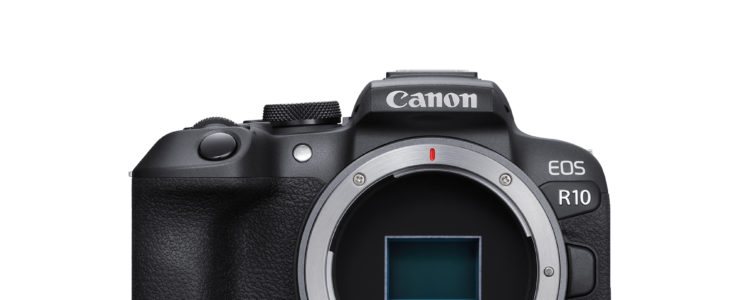
canon eos r10 review

Canon Japan published a customer advice about some batches of Canon EOS R10 cameras and EF 50mm f/1.2L lenses.

Canon found the following issue with Canon EOS R10 cameras:

A small part of this product makes a loud noise […] when the built-in strobe fires.

Is your Canon EOS R10 part of this batch? Find out this way:

[EOS R10 cameras] with the serial number (on the bottom of the camera) of which the two digits from the left are “01” to “10”.

(For products sold in Japan, some products from “01” to “03” are eligible.)

See here to learn more…

CANON EF 50mm f/1.2L

Some units of the Canon EF 50mm f/1.2L lens might have this issue:

When shooting in a high temperature environment, the exposure may not be as intended, resulting in variations in the brightness of the images shot in the same scene, or an error “Err01” may occur.

How to find out if your lens is affected? Check the serial number. Canon states:

Some of the EF50mm F1.2L USM interchangeable lenses for single-lens reflex and mirrorless cameras produced in 2022.

Lenses with the 10-digit serial number printed on the lens body (see the figure on the right) whose four digits from the left are “1840”, “1940”, “2040”, “2140”, and “2240” are eligible.

See here to learn more…

[via asobinet]

Canon EOS-1DX Mark III Firmware Update (version 1.7.1)

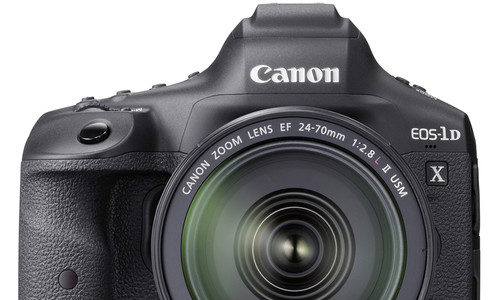
canon eos-1d x mark iii sensor

Canon released a firmware update for the Canon EOS-1DX Mark III, version 1.7.1. Please note: at time of writing the firmware update was available on Canon Japan, we link there.

Canon EOS-1DX Mark III firmware 1.7.1 (download):

  • [Save/load communication settings to card] has been added to the menu. Network settings can now be inherited between cameras of the same model.
  • You can now trim and resize images while transferring them to the FTP server.
  • Corrected the phenomenon that some cameras that meet certain conditions may not turn on immediately after updating to firmware version 1.7.0.
  • Fixed minor bugs.

Firmware Updates For Canon EOS R3 (ver. 1.4.0) And EOS R5 (ver. 1.8.1) Released

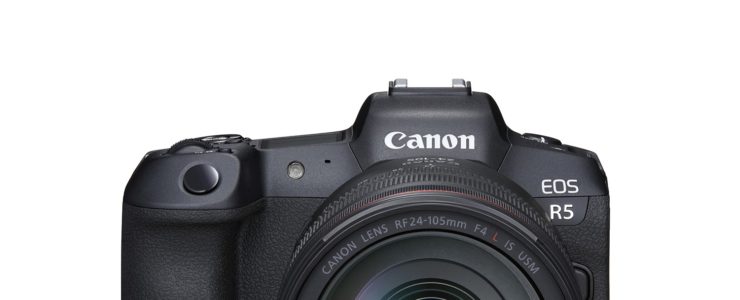
Canon EOS R5 review

Canon released firmware updates for the Canon EOS R3 and Canon EOS R5. Please note: at the time of writing the firmware updates were available at Canon Japan, so we link there.

Canon EOS R3 firmware 1.4.0 (download):

  • Compatible with Speedlite EL-5. *It is not compatible with the automatic dimming function of the AF auxiliary light.
  • Added [Registered people priority] to the menu. Pre-registered people can now be preferentially detected and tracked.
    • * The effect may not be obtained depending on the shooting environment and scenes where the subject is moving, such as when the face is small, when the face is slanted/side profile, when part of the face is hidden, or when the subject is moving.
  • [Save/load communication settings to card] has been added to the menu. Network settings can now be inherited between cameras of the same model.
  • [Panning Assist] has been added to the menu. When panning with a compatible lens, “camera shake correction” and “subject blur correction” are performed during exposure.
  • Shortened the time it takes for the AWB results to be reflected in the viewfinder when looking through the viewfinder with the auto white balance (AWB) setting.
  • “Image protection” for FTP transfer has been added to the menu. Images transferred by FTP can now be automatically protected. This makes it possible to determine whether or not the image has been FTP-transferred.
  • Fixed minor bugs.

Canon EOS R5 firmware version 1.8.1 (download):

  • [IBIS High-Resolution Shooting] has been added to the menu. By utilizing the in-body image stabilization mechanism, it is now possible to record images with a higher sense of resolution.
  • [Save/load communication settings to card] has been added to the menu. Network settings can now be inherited between cameras of the same model.
  • You can now trim and resize images while transferring them to the FTP server.
  • “Image protection” for FTP transfer has been added to the menu. Images transferred by FTP can now be automatically protected. This makes it possible to determine whether or not the image has been FTP-transferred.
  • Fixed minor bugs.

Canon EOS R6 vs EOS R6 Mark II – 10 Differences And Full Comparison

eos r6 vs eos r6 mark ii

Want to know what differences there are between the Canon EOS R6 Mark II and the previous iteration, the EOS R6? Read on.

Canon EOS R6 at a glance:

  • 20MP Full-Frame CMOS Sensor
  • DIGIC X Image Processor
  • 4K60p and FHD 120p 10-Bit Internal Video
  • Sensor-Shift 5-Axis Image Stabilization
  • 12 fps Mech. Shutter, 20 fps E. Shutter
  • Dual Pixel CMOS AF II with 1053 Points
  • 0.5″ 3.69m-Dot OLED EVF
  • 3″ 1.62m-Dot Vari-Angle Touchscreen LCD
  • Subject Tracking with Deep Learning
  • Dual SD UHS-II Memory Card Slots

Canon EOS R6 Mark II at a glance:

  • 24.2MP Full-Frame CMOS Sensor
  • 4K60 10-Bit Internal Video, C-Log 3
  • External 6K ProRes RAW Recording
  • Dual Pixel CMOS AF II
  • 12 fps Mech. Shutter, 40 fps E. Shutter
  • Sensor-Shift 5-Axis Image Stabilization
  • 3.69m-Dot OLED EVF
  • 3″ 1.62m-Dot Vari-Angle Touchscreen LCD
  • Dual UHS-II Memory Card Slots
  • Multi-Function Shoe, Wi-Fi and Bluetooth

Our friends at Mirrorless Comparison compared the Canon EOS R6 and the Canon EOS R6 Mark II. In the conclusion they say…:

At first, the improvements brought to the R6 mark II may not seem too important, but after using the camera for nearly three weeks, I’m confident to say the new model has been refined in such a matter that it gets quite close to perfection.

There are small yet useful improvements, like having a dedicated switch for the movie mode, which allows you to use the custom modes when recording videos, and not just when taking photos. Extra features such as the HF Anti-Flicker can be a godsend in specific situations, whereas others such as Focus Stacking can become that extra tool you learn to appreciate quickly. All this to say that the R6 II is a more complete camera.

The new 24MP sensor doesn’t bring a substantial improvement when it comes to dynamic range or high ISO, but you get those 4 extra megapixels if you feel 20MP is a bit too low. The readout speed is also faster, so using the electronic shutter will result in less distortion with fast movements.

The autofocus has gained a few extra settings and is more advanced when it comes to subject tracking. The latter may not always make a difference, but I found the R6 II to be better in low light, to the point of being as reliable as it is in good light situations.

Read the full review at Mirrorless Comparison

The review is complete and comes with sample images, test charts and everything you might expect from a professional review, so I suggest you check it out at Mirrorless Comparison. You might also watch the video below to get the review.

Btw, these are the 10 differences:

  1. Sensor: it’s mainly about the (small) difference in 4MP. Dynamic Range and high ISO are similar.
  2. Body Controls: a few small changes make the R6 II even better to use, but they are identical for the most part
  3. Connectivity: faster WiFi and extra USB options for the R6 II (including webcam mode)
  4. Battery Life: a bit better on the R6 II overall, especially when recording video
  5. Continuous Shooting: the R6 goes up to 20fps, the R6 II works up to 40fps with less rolling shutter, and it has extra options like the Pre-Shooting mode, but buffer is more limited.
  6. Video: no more overheating problems with the R6 II, no more recording limitation, less rolling shutter and no sensor crop in 4K 30p and 60p
  7. Other Features: the R6 II packs extra functionalities including Breathing Compensation, Focus Stacking, High Frequency Anti-Flicker mode, and more
  8. Autofocus: the R6 II has a more advanced software, and I find the camera better in low light. My birds in flight test shows comparable performance.
  9. Stabilisation: the R6 is a bit better for stills, but both are on the same level for video
  10. Price: the R6 II is more expensive

More Canon EOS R6 Mark II review coverage is listed here.

Canon EOS R6 Mark II world wide orders: [shoplist 70314]

Canon EOS R6 world wide orders: [shoplist 62745]

Is Canon Testing Prototypes Of Upcoming Tilt-shift Lenses?

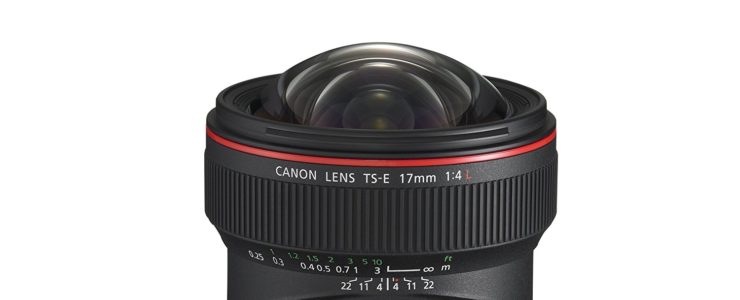
TS-E 17mm f/4L

It seems Canon might be set to soon announce new tilt-shift lenses for the RF mount.

Rumor has it that Canon is already testing two tilt-shift lenses in the wild. The source claims they have been “told that the new tilt-shift lenses are in the hands of a select group of photographers“. These are the two rumored tilt-shift lenses:

  • Canon TS-R 14mm f/4L
  • Canon TS-R 24mm f/3.5L

What do you think?

Source: Canon Rumors