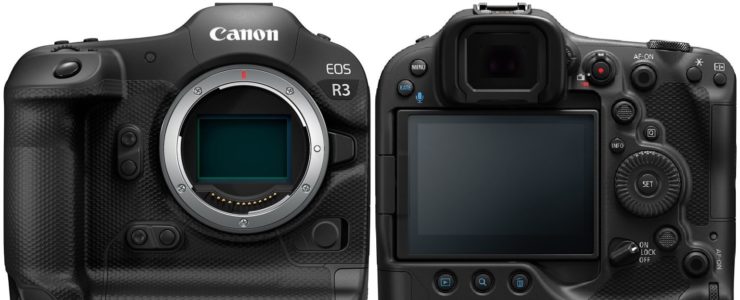
Brace for impact: the Canon EOS R3 might be released soon. In a few weeks, indeed.
Nokishita reports that the Canon EOS R3 and accessories (ST-E10, AD-E1, DM-E1D, ER-L1, ER-HE, ER-H) have been added to Canon’s latest product lists. Some information about upcoming lenses also leaked:
According to the corresponding accessory table, the RF 16mm has a hood of EW-65C, a cap of E-43, and a lens pouch of LP1014. The RF100-400mm has an E-67II cap and an LP1224 pouch.
The resolution of the upcoming Canon EOS R3 is no longer a mystery. It’s 24MP, and it got more than one confirmation. Oh, and have a look how impressing the 30fps of the R3 are. We expect the announcement in Fall 2021, likely in September. Here is what we know about the EOS R3 so far:
24MP backside illuminated image sensor
Multi-Controller & Smart Controller
Vari-Angle Touch Screen
NEW accessory shoe
Wifi 5GHz
High speed 30fps electronic shutter with AF/AE tracking + RAW shooting at this speed
AF down to -7.0 EV
8 Stops Coordinated Control IS with Optical IS and In-Body IS
4K Canon Log3
Oversampling 4K
Internal RAW video
Inclusion of cars and motorbikes in AF tracking technology
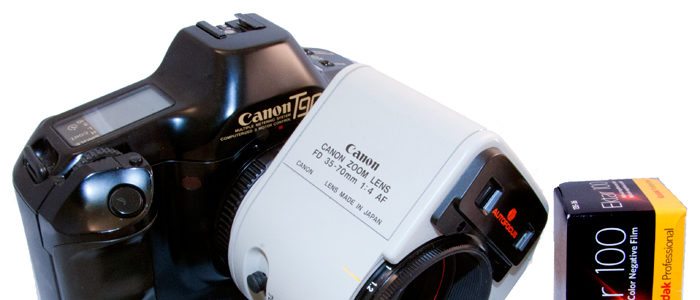
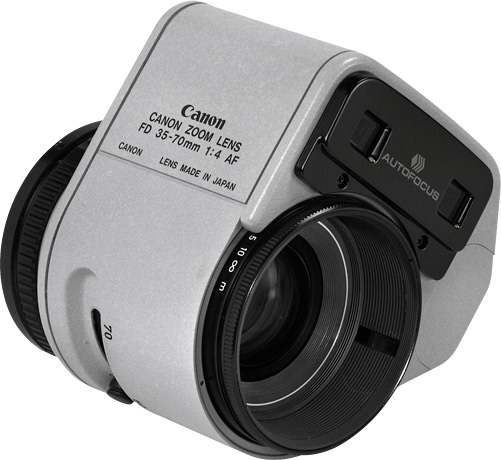
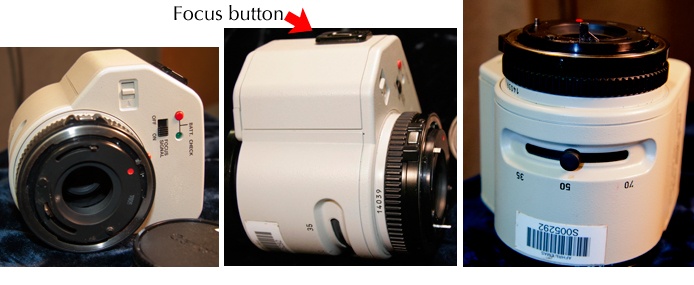
Nowadays for most photographers it is not imaginable to have a lens without autofocus. Hasn’t always been that way. See how Canon managed to make an awesome AF lens not less than 40 years ago: the FD 35-70mm ƒ/4 AF.
This is the world’s first autofocus zoom lens with an autofocus function using Canon’s own SST (Solid State Triangulation) method. The incorporation of this function into the best-selling FD35-70mm f/4 (June 1979) interchangeable lens brought about automation of focusing for SLR cameras.
The SST method is a system in which information on the photographed object that enters the sensor through two fixed mirrors is converted into an electric signal and distance is measured by a microcomputer, with focusing performed by moving a distance ring with a motor. The latest fixed imaging device CCD (charge-coupled device) technology is adopted to provide high resolution and a broad dynamic range able to detect low to high luminance, making it less susceptible to the contrast and pattern size of the photographed object and enabling highly precise autofocusing. Also, as the SST method does not have a movable section in the distance measuring mechanism, no vibration or electric noise is caused, which provides high reliability fitting of a high-end SLR camera.
Kai W has a look at and introduces the Canon FD 35-70mm ƒ/4 AF lens in the video below.
More information about the Canon FD 35-70mm ƒ/4 AF may be found here.
So, we are talking about a $12,000 lens here. Welcome to a new Canon RF 400mm f/2.8L IS review. How doesn’t have a spare kidney?
At a glance:
RF-Mount Lens/Full-Frame Format
Aperture Range: f/2.8 to f/32
Optical Image Stabilizer
Super UD and Fluorite Elements
Super Spectra and Air Sphere Coatings
Customizable Electronic Focusing Ring
Two Focus Presets
Circular 9-Blade Diaphragm
Weather-Sealed Design, Fluorine Coating
Rotatable Tripod Collar
Christopher Frost posted his Canon RF 400mm f/2.8L IS review. He says:
This is literally the highest quality camera lens I have ever handled – physically awesome, optically impeccable…and incredibly expensive. Canon have been honing the craft of designing and producing these lenses for years, now: what can this latest version achieve to make it worth its asking price?
Watch the video below to learn what makes this lens so awesome, and so expensive.
Another rather interesting Canon RF 400mm f/2.8L IS review can be seen here.
It seems Canon will soon announce new lenses for the RF mount. One of them might come with the form factor of a pancake lens.
Nokishita reports that an RF 16mm f/2.8 lens and an RF 100-400mm lens are set to get released soon. Both lenses are for the Canon EOS R full frame mirrorless system. The RF 16mm f/2.8 might be a pancake lens.
I enjoyed using the RF 600mm F11 and RF 800mm F11 more than I had originally anticipated. I thought the F11 aperture and limited focus area would be too much of a trade-off, but I was wrong.
Surely if the clouds are too dark or you’re in the shade of a woodland in rainy conditions, you will struggle to compensate for that slow aperture. The converters (1.4x and 2x) will raise the challenge further because the aperture becomes f/16 and f/22 respectively.
But there are also many situations where f/11 will be enough, and you’ll be able to walk around a nature reserve or hike in the mountains with a lightweight solution, something you can’t say every day about full frame lenses for wildlife photography.
You’ll be glad to hear that the 600mm and 800mm are very sharp, the optical stabilisation is excellent and the autofocus delivers very good performance, despite the limited area available. For the price you pay, you can get a lot out of these two lenses.
My strongest criticism is the lack of weather sealing. I understand that these are non-L lenses designed for amateurs, but they’re also two lenses that photographers will use outdoors 99% of the time. It would be great to be able to walk around without worrying about light rain or a bit of dust. It is also annoying to have to buy the lens hood separately.
This website or its third-party tools use cookies, which are necessary to its functioning and required to achieve the purposes illustrated in the cookie policy. If you want to know more or withdraw your consent to all or some of the cookies, please refer to the cookie policy. By closing this banner you agree to the use of cookies.