These Guys Have Fun Slicing Up Canon Cameras And Lenses With A Water Jet

water jet

I hope you have more educated ways to have fun with your Canon cameras and lenses.

The folks behind Waterjet Channel like to slice their gear up by using a 60,000 psi water jet cutter. In the videos below you see how they massacre a Canon Elan 35mm SLR camera, an EF-S 17-85mm f/4-5.6 IS zoom lens, and a Canon PowerSHot G7 X.

These guys already sliced up Canon gear in the past. We hope you’ll show some more love to your gear (or: please do not try this at home). The water jet craziness was spotted by The Phoblographer.

Canon Patent To Automatically Find Best Irradiation Angle For Bounce Flashes

Canon patent

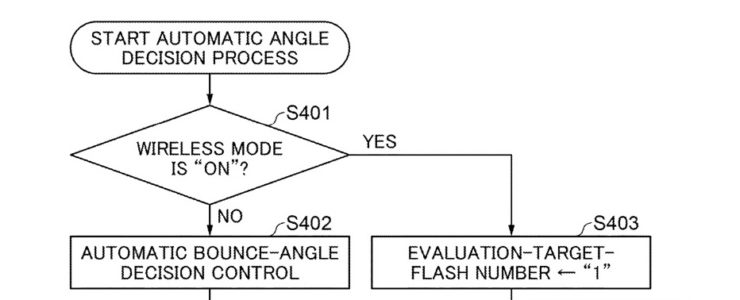
Canon patent application US 2019-0230271 discusses methods and algorithm to automatically establish the optimal irradiation angle for bounce flashes.

In other words, the aim of the Canon patent application is automatically find the irradiation angle of each receiver-flash in a setup where you are using a plurality of receiver-flashes.

The Canon patent discusses…

[…] an image pickup apparatus that is capable of automatically finding an irradiation angle of each external flash in photographing using a plurality of external flashes. An image pickup apparatus controls external flashes that are communicably connected to one another and have light emitting units of which irradiation angles are variable. A photometry device obtains a photometry value. A memory device stores a set of instructions. At least one processor that executes the set of instructions to: obtain photometry values at times of emissions at each of different irradiation angles for each of the external flashes, generate an evaluation value at each of the different irradiation angles based on a photometry result obtained by the photometry device, and decide an irradiation angle for photographing of each of the external flashes based on the evaluation values generated.

The issue more detailed:

There is a known image pickup apparatus, such as a digital camera, that does not only irradiate an object directly with flash light but also enables what is called a bounce flash photographing by irradiating the entire area including the object with flash light that is directed to a ceiling by changing a flash-light irradiation angle and is reflected and diffused by the ceiling. Use of a receiver-flash during the bounce flash photographing enables various expressions. For example, a light amount balance between irradiation light from a right side of an object and irradiation light from a left side can be changed, and a shadow appearing in a background can be eliminated by irradiation light toward the background.

Appropriate determination of the irradiation direction of the flash light in photographing using a receiver-flash and the bounce flash photographing requires time and effort from a photographer. For example, an appropriate irradiation direction of flash light in the bounce flash photographing is decided by repeating test photographing at several times. In the photographing using a receiver-flash, if an irradiation direction of flash light of the installed receiver-flash has shifted from a direction toward a target, a photographer must go to the receiver-flash and adjust the irradiation direction.

In view of such failure, Japanese Laid-Open Patent Publication (Kokai) No. 2011-221364 (JP 2011-221364A) suggests a technique that repeats emission and photometry while changing an irradiation angle of flash light and stores the irradiation angle at which the maximum photometry value among the obtained photometry values except for photometry values within a predetermined range has been obtained. This suggestion enables to automatically find the angle at which an irradiation light amount to an object is maximized except for the irradiation angles directly directed to the object as the irradiation angle for the bounce flash photographing.

However, the technique disclosed in the above-mentioned publication cannot automatically find the irradiation angle of each receiver-flash in the photographing using a plurality of receiver-flashes.

SUMMARY OF THE INVENTION

[…] Accordingly, a first aspect of the present invention provides an image pickup apparatus controlling external flashes that are communicably connected to one another and have light emitting units of which irradiation angles are variable, the image pickup apparatus comprising a photometry device that obtains a photometry value, a memory device that stores a set of instructions, and at least one processor that executes the set of instructions to: obtain photometry values at times of emissions at each of different irradiation angles for each of the external flashes, generate an evaluation value at each of the different irradiation angles based on a photometry result obtained by the photometry device, and decide an irradiation angle for photographing of each of the external flashes based on the evaluation values generated.

Accordingly, a second aspect of the present invention provides a control method for an image pickup apparatus controlling external flashes that are communicably connected to one another and have light emitting units of which irradiation angles are variable, the control method comprising a photometry step of obtaining photometry values at times of emissions at each of different irradiation angles for each of the external flashes, a generation step of generating an evaluation value at each of the different irradiation angles based on a photometry result obtained in the photometry step, and a decision step of deciding an irradiation angle of each of the external flashes based on the evaluation values generated in the generation step.

According to the present invention, an irradiation angle of each external flash is controlled so as to irradiate an object or a background of the object in accordance with a setting in photographing using a plurality of external flashes.

More Canon patent applications are listed here. Some particularly interesting patent applications we think might get into production are these:

Canon Patent For 12-48mm f/1.8-4.0 Lens For EOS M System

Canon patent

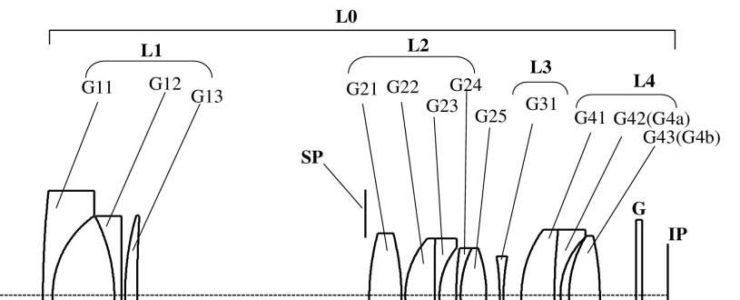
Canon patent application 2019-120821 (Japan) describes the optical formula for a 12-48mm f/1.8-4 lens for the Canon EOS M mirrorless camera system.

An excerpt from the Canon patent:

[…] provide a zoom lens which is small in the whole lens system, has a wide angle of view, a high zoom ratio, and a large aperture ratio and has high optical performance over an entire zoom range. 
[Means for solving]A 1 lens group having negative refractive power, a 2 lens group having positive refractive power, a 3 lens group having negative refractive power, and a 4 lens group having positive refractive power arranged in this order from the object side to the image side, and the 1 lens group is stationary at the time of zooming. In this zoom lens, a 2 lens group, a 3 lens group, and a 4 lens group are moved and an interval between adjacent lens groups is changed. The 4 lens group has 2 or more lenses, and appropriately sets a focal length f 2 of the 2 lens group, a focal length fw of the entire system at the wide-angle end, a moving amount M 2 of the 4 lens group during zooming from the wide-angle end to the telephoto end, and a moving amount M 4 of the second lens group during zooming from the wide-angle end to the telephoto end. 

More Canon patent applications are listed here. Some particularly interesting patent applications we think might get into production are these:
This Universal Camera Strap With Lifetime Warranty Promises To Be The Last Strap You’ll Need

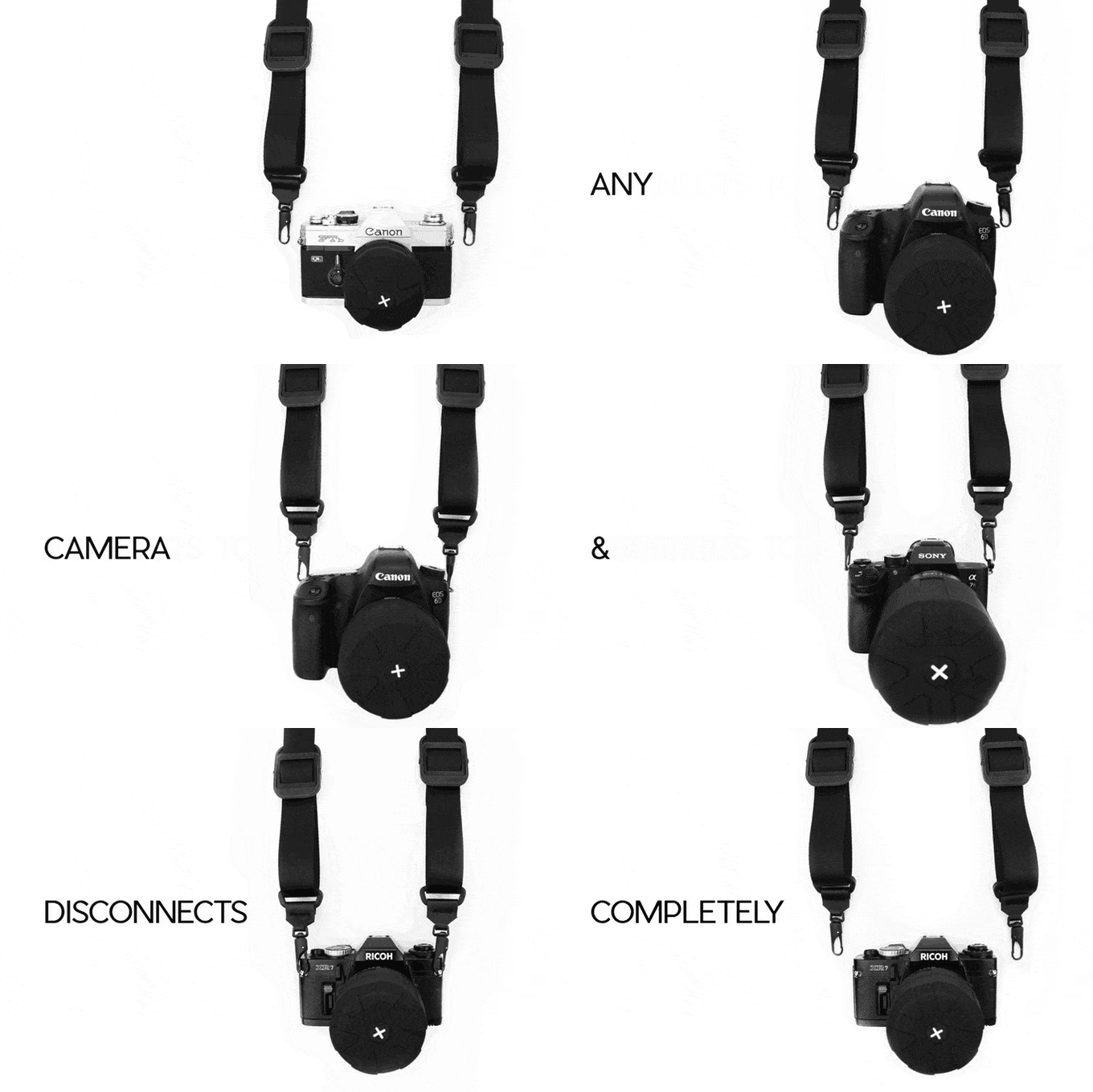
Universal Camera Strap

This universal camera strap by KUVRD got funded in a bliss.

KUVRD states the universal camera strap comes with lifetime warranty. You can learn more and fund the KUVRD universal camera strap here.

Universal Camera Strap

Other noteworthy Kickstarter projects we liked a lot:

  1. DUO Daypack, quick access camera bag with lifetime warranty
  2. Kamlan 50mm f/1.1 lens for $199
  3. Peak Design super light travel tripod

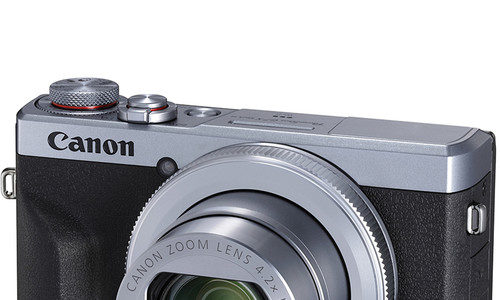
Canon PowerShot G7 X Mark III Review (highly recommended, Photography Blog)

Canon PowerSHot G7 X Mark III

Canon PowerShot G7 X Mark III at a glance:

  • 20.2MP 1″ Stacked CMOS Sensor
  • DIGIC 8 Image Processor
  • 4.2x Optical Zoom f/1.8-2.8 Lens
  • 24-100mm (35mm Equivalent)
  • 3.0″ 1.04m-Dot Tilting Touchscreen LCD
  • UHD 4K30p and Full HD 120p Video
  • 20-fps Shooting, 30-fps Raw Burst Mode
  • Built-In Bluetooth and Wi-Fi
  • Live Streaming & Vertical Video Support

Photography Blog completed their full review of the new Canon PowerShot G7 X Mark III.

From their conclusion:

The Canon PowerShot G7 X Mark III might look familiar on the outside, but rest assured that this is no minor refresh, with a wealth of internal improvements that make it one of Canon’s best compact cameras for both stills photographers and keen vloggers alike.

Chief among them are the new stacked image sensor and latest Digic 8 processor, which combine to make the G7 X III one of the fastest shooting stills cameras and most capable video cameras in the company’s compact line-up. For the first time 4K video with no crop is available – yes, no crop – which is a big milestone for Canon in light of recent 4K releases that have suffered from a heavy crop factor. 

Add in the plethora of other advanced video features that are making their debut, including a 3.5mm mic input, live streaming to YouTube over Wifi, support for vertical movies for IG TV, and the 120fps slow-motion mode, and it’s pretty clear that Canon have rather successfully gone all out with the G7 X III to target the vlogging generation.

Read the review at Photography Blog…

Canon PowerShot G7 X Mark III: [shoplist 57126]

Canon EOS M5 Mark II and EOS M6 Mark II Might Be Announced In August 2019

canon eos m5 mark ii mirrorless

As expected, a new rumor confirms an already leaked suggestion that Canon might announce the Canon EOS M5 Mark II and the EOS M6 Mark II (all rumors).

Both cameras have already leaked through certification authorities. We just didn’t know if Canon would announce them along with the EOS 90D, or later on.

Along with the announcement date suggestion, the latest rumor delivers also some basic specifications for the Canon EOS M5 Mark II and EOS M6 Mark II:

  • Internal product name: Project Nacho
  • Both cameras will have a similar EVF to the Canon RP
  • No crop in 4K video
  • Supports high frame rates for slow-motion video

It’s not clear what is meant with “both cameras will have a similar EVF to the Canon RP” since the EOS M5 has a built-in EVF and the EOS M6 has not.

If the August announcement date is correct (we believe it is around 28th), then we should soon see more detailed leaks and images. Stay tuned, more to come soon…

Source: Canon Rumors