No secret that the camera industry is not going through a stellar moment. Now it seems it’s worse than expected.
LensVid is not new to camera market analysis, Now they published their extensive look at the camera industry in the last 10 years and how the big fall happened. They also make some predictions about the future, and it looks grim as the past.
Venus Optics announces the add of Canon RF mount for Laowa 11mm f/4.5 FF RL lens and Nikon Z mount for Laowa 65mm f/2.8 2x Ultra-Macro APO
(FF = Full Frame, RL = Rectilinear)
Anhui China, 19 Feb, 2021 – Venus Optics, the manufacturer specialized in making unique camera lenses, now offers more variants to 2 popular Laowa lenses. Added Canon RF mount for the Laowa 11mm f/4.5 FF RL lens (Full Frame) and Nikon Z mount for Laowa 65mm f/2.8 2x Ultra-Macro APO (APS-C). Offering Canon Full-frame (R, RP, R5 & R6) users an exceptional ultra-wide experience and the high magnification power on Nikon APS-C body (Z50).
Laowa 11mm f/4.5 FF RL
Laowa 11mm F4.5 FF RL is an extremely compact rectilinear(RL) wide-angle lens for full-frame (FF) mirrorless cameras. The remarkable 126° angle of view with 19cm minimum focus distance can be found in this 6.3cm(2.5 inches) long and 254g(8.9oz) lens. It allows you to capture the stunning landscape, precious travel moments and beautiful cityscape without any burden. The lens also includes 2 aspherical elements and 3 extra-low dispersion elements to guarantee the sharpness, suppress chromatic aberrations and distortion to the minimum.
Conveniently a 62mm filter can be screwed onto the lens directly, or a 100mm-wide filters can be used. The 5-bladed aperture able to create a clean and appealing stunning 10-point sunstars.
Laowa 11mm f/4.5 FF RL is now available in Leica M, Sony FE, Nikon Z, Canon RF and L mount. MSRP in US is US$799(Leica M) and US$699(other mounts).
A technology already seen on Canon film cameras might come to last generation mirrorless camera technology, sooner or later.
Canon patent application US20210051265 (USA) discusses how to implement eye-controlled focus on a mirrorless camera.
An image capture apparatus detects a subject in a captured image. The image capture apparatus further recognizes its user based on an eyeball image of the user. The image capture apparatus then selects a main subject area from among the detected subject areas, based on information regarding subjects captured in the past and stored being associated with the recognized user.
There is a significant difference if compared with the eye-controlled focus technology used inn the old days for film cameras. The patent discusses some sort of intelligent algorithm that not only recognizes the user but also remembers where the user looked and how frequently.
We think the technology discussed in the patent might get into production within the next years. More Canon patents are listed here. Some particularly interesting patent applications we think might get into production are these:
Only today (2/18/21) Adorama has a 26% discount on the Datacolor SpyderCheckr Color Calibration for Digital Cameras.
At a glance:
Consistent Color Control for your RAW workflow made easy and fast with SpyderCheckr and its powerful software, giving you a color standard for any camera and decreasing your post production time
Neutral Gray target & Gray ramp for in-camera white balance and visual neutrality analysis
Extensive skintone samples for portrait & fashion photography
Durable, eco-friendly self casing construction for easy transport and field use, with replaceable targets, tripod mount and Fade strip indicator
Easy-to-use software interacts with Adobe Lightroom, Photoshop and Camera Raw to produce calibration presets, which fit directly into your digital workflow; No DNG processing required, multiple lightsource calibration option included
The Datacolor SpyderCheckr Color Calibration Tool is a color target for use with digital cameras. It features 48 swatches, including various shades of gray and skintones. You can use the swatches to perform a custom white balance on your camera, ensuring that your camera settings correctly match the lighting conditions in which you are shooting. The SpyderCheckr ships with software for Mac and Windows. In order to use it, you’ll have to use an Adobe Camera RAW (ACR) post-production workflow. This allows you to use the calibration tool in conjunction with Photoshop, Photoshop Elements and Photoshop Lightroom.
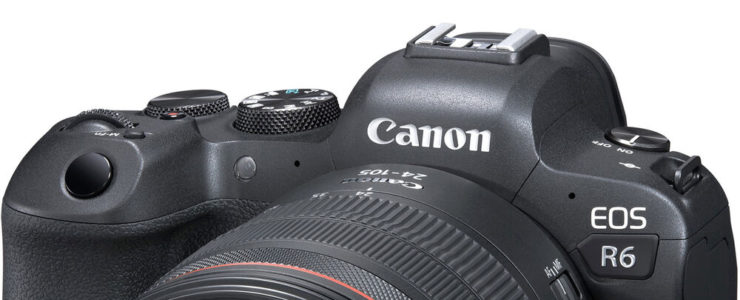
Here is a new Canon EOS R6 review, one that gives the EOS R6 the praises it deserves.
Coming from Photography Life, a Canon EOS R6 review with sample pictures, test charts, image quality and dynamic range tests. From the reviewers conclusion:
[…] after I actually used the camera extensively for several months, I realized that I was dealing with a whole new level of performance – something I honestly did not expect to see in a second-generation body. While Sony has been tweaking and fine-tuning its cameras over four generations to get to where they are today, Canon was able to deliver such impressive results in less than half the time, instantly putting its EOS R5 and R6 cameras on the top of the game.
The reviewer is definitely fond of the Canon EOS R6:
The Canon EOS R6 does so many things right, while ticking all the main boxes. It is easy to use and it handles amazingly well with great ergonomics and customization options. Its autofocus system is vastly superior to the EOS R, matching the AF speed and accuracy of some of the best cameras on the market today, including the Sony A9 II. Heck, as a Nikon shooter, I have to be honest and say that Nikon’s AF has fallen significantly behind when compared to the EOS R6, even on its latest bodies with dual processors. The sensor performance of the EOS R6 is superb, both in terms of high ISO and dynamic range performance. And if you have never experienced in-body image stabilization before (especially coming from a Canon DSLR), you will be blown away by it on the EOS R6.
The EOS R6 flies a bit under the radar and doesn’t get the attention it deserves. There are many features that the R6 shares with the EOS R5, a class leading autofocus system for instance, and the R6 has an imaging sensor derived not less than from the flagship EOS-1D X Mark III. For more Canon EOS R6 review stuff see here. User manuals are available for download for the EOS R5 and the EOS R6.
EOS R6 at a glance:
20mp Full-frame CMOS sensor
Sensor-based image stabilisation (IBIS) – works with any lens
This website or its third-party tools use cookies, which are necessary to its functioning and required to achieve the purposes illustrated in the cookie policy. If you want to know more or withdraw your consent to all or some of the cookies, please refer to the cookie policy. By closing this banner you agree to the use of cookies.