This Is What Skylum Luminar 4’s AI Sky Replacement Delivers (and it’s impressing)

luminar 4

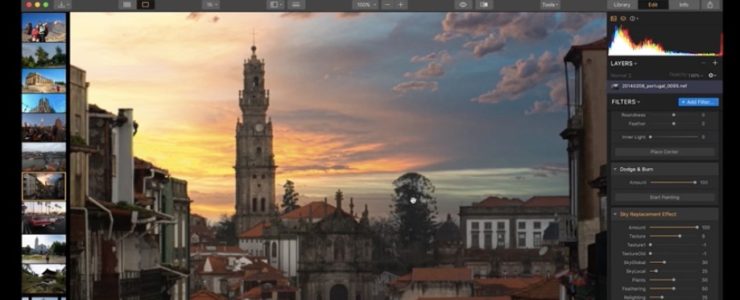
Skylum posted a sneak preview of the AI replacement feature of the upcoming Luminar 4 photo editing software. And it’s pretty impressing in our opinion. See for yourself in the short video below.

You can pre-order Skylum Luminar 4 at a special early bird price.

The actual version, Luminar 3, can be purchased with an exclusive $10 discount by using code WATCH at checkout.

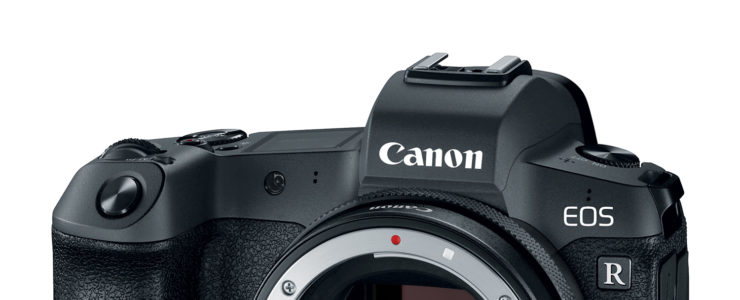
Canon EOS 90D: Another Confirmation It Will Have 32MP, And What To Expect From Canon

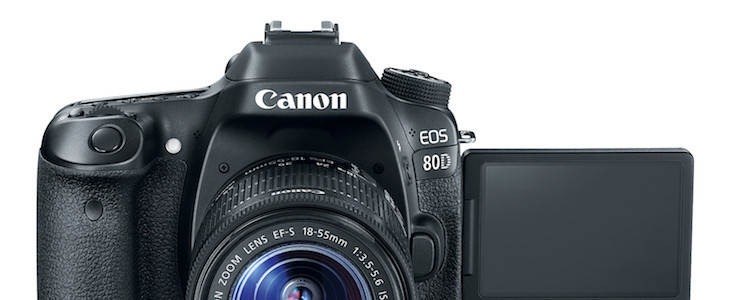
APS-C EOS 80d canon eos 90d

Nothing new, just more hints about the resolution of the upcoming Canon EOS 90D and EOS M6 Mark II.

The 32MP resolution has already suggested by previous rumors. However, given the amount of mails in our inbox suggesting it over and over, it seems now very likely this will be the resolution of Canon’s next generation of APS-C cameras, both MILC and DSLR.

So far, these are the rumored Canon EOS 90D specifications:

  • 32.5mp APS-C DPAF Sensor
  • Dual DIGIC 8
  • Dual SD card slots
  • 10fps still shooting
  • ISO range of 100-51,200
  • 45 AF points (no word on the number of cross-type points)
  • 4K video at 24/25, 30 and 60fps (No word on DPAF in 4K recording)
  • 3.2″ rear articulating LCD
  • Dust and moisture sealing
  • Built-in wifi and Bluetooth
  • $1399 USD price at launch
  • Coming late August 2019

We still recommend to take it with a grain of salt. We expect the announcement on August 28th, 2019. Images and reliable specifications should leak very soon. For those who missed it: Canon will most likely replace both the EOS 80D and EOS 7D Mark II with the EOS 90D.

Most likely Canon will not announced just the EOS 90D on August 28th. We expect the EOS M6 Mark II to get announced as well. A alleged specification list for the EOS M6 Mark II has also already leaked (here too: take it with a grain of salt):

  • 32.5 mp APS-C CMOS sensor (new sensor technology for higher dynamic range)
  • DIGIC 8+ Imaging Processor
  • 4K up to 30p (with no crop or 1.3x no pixel binning crop), Full HD up to 180p
  • No Canon Log but new Movie Picture Style
  • Dual Pixel AF Focus Guide
  • New Selfie mode and Vlog mode
  • Enhanced Movie IS
  • High-speed continuous shooting at a maximum of 16 FPS (with AE/AF)
  • RAW Burst mode at 30 FPS (with AE/AF)
  • Dual Pixel AF with expanded area
  • Eye AF (tracking possible)
  • Electronic shutter 1/16000s
  • Focus Bracketing
  • Supports external electronic viewfinder
  • USB-C charge power supply

Moreover, from leaked certification data, we know that there is also a Rebel DSLR or entry level EOS M on Canon’s agenda. This new Rebel/EOS M could well be announced along with the EOS 90D but we didn’t get any reliable information so far.

What else can we expect from Canon in the near future? A couple of lenses for the EOS R system are on their way. The Canon RF24-70mm F2.8 L IS USM and Canon RF15-35mm F2.8 L IS USM are expected to be announced before the end of 2019 but for the time being we do not know if they will be announced along with the EOS 90D. It’s more likely that not. Probably these lenses will be announced along with the upcoming high resolution EOS R camera, still before the end of 2019.

Stay tuned, there is more to come soon…

Canon Cameras Might Get An Expanded Dynamic Range Thanks To Dual Pixel AF Sensors

Dual Pixel AF

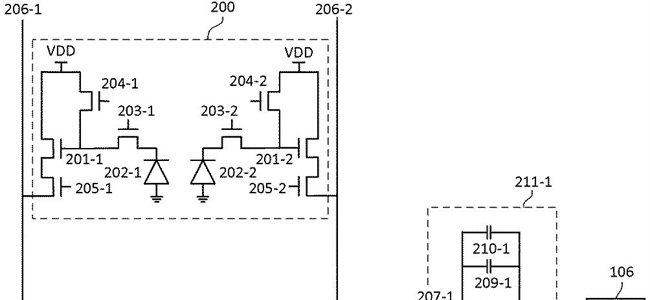
Image sensors with Dual Pixel Autofocus on board can be used to obtain expanded dynamic range, a patent application suggests.

Canon patent application 2019-129491 (Japan) discusses technology and methods for an image sensor output with increased dynamic range. As you probably know, DPAF splits a pixel in two (see here how it works). The idea is that the two half pixel can be amplified at different levels while being read and processed at the same moment. Think about it as “dual ISO”.

More Canon patent applications are listed here. Some particularly interesting patent applications we think might get into production are these:

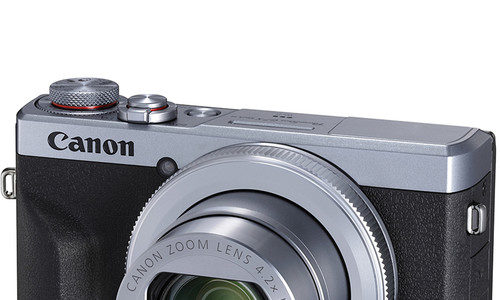
Canon Powershot G7 X Mark III Review (more bang per bucks than Sony RX100 VII, ePHOTOzine)

Canon Powershot G7 X mark iii

Canon Powershot G7 X Mark III at a glance:

  • 20.2MP 1″ Stacked CMOS Sensor
  • DIGIC 8 Image Processor
  • 4.2x Optical Zoom f/1.8-2.8 Lens
  • 24-100mm (35mm Equivalent)

ePHOTOzine posted a full review of the new Canon Powershot G7 X Mark III. They gave it a rating of 4/5.

From the conclusion:

The G7X III […] offers a number of updates that should impress both photographers and videographers. Including being able to shoot at 30fps (raw burst), or upto 20fps (with JPEG, raw, or both). 

[…] The images from the G7X III, at wide-angle, can be a little soft towards the edges and corners of the frame, and macro performance left us a little disappointed, but in every other situation, results are good. […]

For videographers, the G7 X III with microphone input, 4K video, and 120fps FullHD video will be an easy choice to make, and an immediate purchase choice. There are are only a few minor niggles, that could be the fly in the ointment for some, including the lack of 24fps video recording, and the lens control ring clicks being there. The camera certainly offers much higher “bang per buck” than the RX100 VII fron Sony, which also offers a microphone socket, but at a price of nearly £1200 [and nearly $1,200, editors note].

Read ePHOTOzine’s review…

Canon Powershot G7 X Mark III: [shoplist 57126]

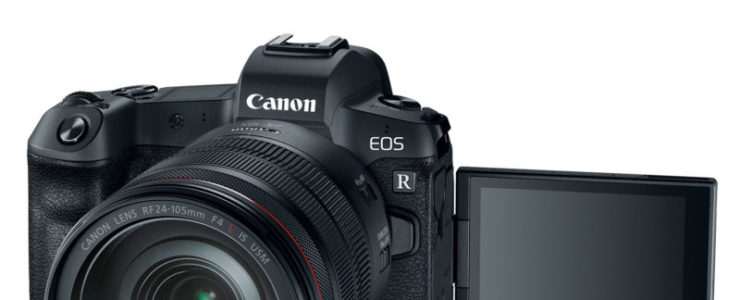
A RF 200-500mm L Lens For The Canon EOS R Might Come In 2020, But No More EF Telephotos

canon eos r firmware update

Latest murmuring from the rumor mills suggests that Canon might release a RF 200-500mm L lens for the EOS R system in late 2020.

This lens, according to the source, should be an equivalent of the EF 100-400mm f/4.5-5.6L IS II USM, though not having the same focal length.

The source also states that development of EF supertelephoto lenses was was ceased “quite some time ago”, and that Canon now is focusing on RF lens development.

Source: Canon Rumors

More About The Security Flaw In Canon’s WiFi Transfer Protocol

Security Flaw canon firmware

Canon yesterday issued security advisory concerning a security flaw in their Picture Transfer Protocol, the WiFi transfer protocol used on Canon cameras.

The security flaw was demonstrated by Israeli security company Check Point Research during DEF CON 2019. The security researchers were able to hijack a Canon EOS 80D using USB and wirelessly using WIFI.

The discovered vulnerabilities would allow a malicious actor to take over a target’s DSLR camera through both WiFi and USB, giving him full control over it. Such an infection could, for example, be used for installing a Ransomware on the camera, and demanding ransom for both the images and the camera itself. Not a nice scenario for professionals.

As LensVid sums it up:

An attacker who would want to use a similar approach to perform a real-world ransomware attack on a EOS 80D will need to set-up a rogue WiFi Access Point and initiate the exploit (something that can certainly be done by many sufficiently experienced attackers although will require the Camera’s WIFI to be turned on).

The video below shows how Check Point Research exploited the Canon EOS 80D using the cited security flaw. By building on existing knowledge of Magic Lantern, they were able to build a ransomware.

All the steps involved in exploiting the security flaw in Canon’s WiFi transfer protocol are documented in this technical article.

Check Point Research promptly informed Canon. While waiting for the firmware updates, Canon recommends the following:

  • Ensure the suitability of security-related settings of the devices connected to the camera, such as the PC, mobile device, and router being used.
  • Do not connect the camera to a PC or mobile device that is being used in an unsecure network, such as in a free Wi-Fi environment.
  • Do not connect the camera to a PC or mobile device that is potentially exposed to virus infections.
  • Disable the camera’s network functions when they are not being used.
  • Download the official firmware from Canon’s website when performing a camera firmware update.

Canon already issued a firmware update for the Canon EOS 80D, and more updates will follow.

Unfortunately, that’s not the end of the story. The researchers found multiple critical vulnerabilities in Canon’s Picture Transfer Protocol. And it’s likely these vulnerabilities are present in other manufacture’s PTP as well.

Stay tuned.

[via LensVid]