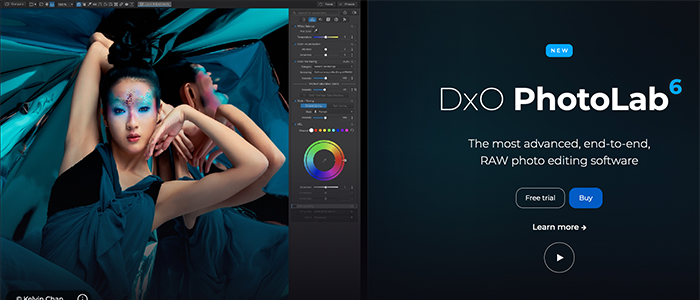
DxO launched PhotoLab 6, and it comes with a lot of artificial intelligence powering editing processes.
At a glance:
- Unparalleled image quality
- DxO’s unique DeepPRIME denoising and exceptional color science raise the bar for RAW processing.
- Legendary optical corrections
- Market-leading corrections built on 20 years of research, giving you sharper images, free of imperfections.
- Innovative creative tools
- Master color and tone with powerful, creative editing tools that you won’t find anywhere else.
- Intuitive local adjustments
- With DxO’s exclusive U Point™ technology you can make targeted edits without tricky masks.
- Powerful photo management
- Search and sort your photos with simple, effective tags, keywords, and project hierarchies.
- No subscription – DxO’s software has always been free of subscription – once you buy it, it’s yours for good.
To learn more about DxO PhotoLab 6 or to purchase it, click here.
DxO press release:
DxO PhotoLab 6, the RAW photo editing software, redefines industry standards for denoising with groundbreaking AI technology — again
In addition to its brand-new DeepPRIME XD denoising technology, this major new version introduces advanced color management featuring a vast working color space, powerful new retouching tools, and refinements to its elegant library system.
Paris (France): DxO Labs, the company which kick-started modern RAW processing and lens correction, today announces the immediate availability of DxO PhotoLab 6, its flagship RAW image editing and workflow software. The latest version features DxO DeepPRIME XD, an AI-powered RAW conversion technology that pushes the boundaries for noise reduction and detail enhancement; a new color management system with an extended working color space; new retouching tools that redefine what photographers should expect from their software; and an upgraded library system that allows easy organization and quick access to images.
DxO DeepPRIME technology gets even better
Experts have long rated DxO’s DeepPRIME technology as the world’s most effective denoising and detail enhancement tool. Now, DxO PhotoLab 6 introduces the new DeepPRIME XD (eXtreme Details) mode which adds further quality to photographers’ RAW files. Ideal for high-ISO images, it removes noise, retrieves previously unseen details, and restores vibrant, natural color.
DeepPRIME XD uses a neural network trained using billions of image samples and routinely gives photographers improvements of more than 2.5 stops. For example, an image shot at 4000 ISO will more closely resemble an image captured at 500 ISO in terms of noise, color, and clarity. And because it is fundamental to the RAW conversion process,
DeepPRIME XD can even increase dynamic range, providing photographers with greater flexibility when shooting in low-light situations. The original DeepPRIME mode is also still on board for faster enhancements or for images that simply need less adjustment.
“We were thrilled by the response to DeepPRIME in DxO PhotoLab 5, but we knew we could do more” explains DxO’s VP of Marketing and Product Strategy, Jean-Marc Alexia. “The new DeepPRIME XD has been a year in development and the AI has literally been teaching itself how to do its job better. The results speak for themselves.”
More accurate color for better images
DxO PhotoLab 6 introduces re-engineered color processing algorithms that push the boundaries of color management, and a new, extended working color space. These are complemented by a Soft Proofing mode to ensure accuracy throughout the entire workflow, allowing photographers to make adjustments according to how their photographs will be reproduced for display, whether it’s on a high-definition screen or as a fine-art print.
The upgrades allow authentic reproduction for even the most saturated colors, and ensure that photographers can harness the full potential of the latest monitors and printers.
New tools for more powerful retouching
DxO PhotoLab 6 adds the new ReTouch tool that extends the capability of healing and cloning well beyond that of other RAW processing software. Photographers can now transform the source through mirroring, rotating, and scaling, or use brushes to fine-tune the area they’re editing into a more accurate shape. The new tool ensures fewer trips outside of DxO PhotoLab for complex cloning and healing tasks, and speeds up workflow while ensuring that editing never moves away from the original RAW file and therefore remains non-destructive.
A refined library system for smarter workflow
Building on its simple but powerful PhotoLibrary system, DxO PhotoLab 6 extends its range of Exif and IPTC tags, adds nesting for Projects, and introduces color labels for easier organization and management of files — all without clumsy, time-consuming catalogs.
Comprehensive and precise lens and camera profiles
Core to DxO PhotoLab 6 are DxO’s pioneering Optics Modules. Almost 20 years ago, DxO patented the concept of lens corrections and since then, the analyses performed in its purpose-built laboratory have set the standard for the digital photo editing industry. The quality and precision of DxO’s Optics Modules remain unmatched by its competitors, partly because lenses and cameras are tested in combination, giving photographers profiles that are tailored specifically to their equipment. With all the latest modules automatically downloaded to DxO PhotoLab 6, you’ll be assured of the best quality results every time.
Price and availability
The ESSENTIAL and ELITE editions of DxO PhotoLab 6 (Windows and macOS) are available to download now from the DxO website (https://shop.dxo.com/en) at the following prices:
- DxO PhotoLab 6 ESSENTIAL Edition: $ 139
- DxO PhotoLab 6 ELITE Edition: $ 219
Owners of DxO PhotoLab 4 or 5 can take advantage of a special upgrade price:
- DxO PhotoLab 6 ESSENTIAL Edition upgrade price: $ 75
- DxO PhotoLab 6 ELITE Edition upgrade price: $ 99


 Laowa 65mm T2.9 2X Macro APO Cine
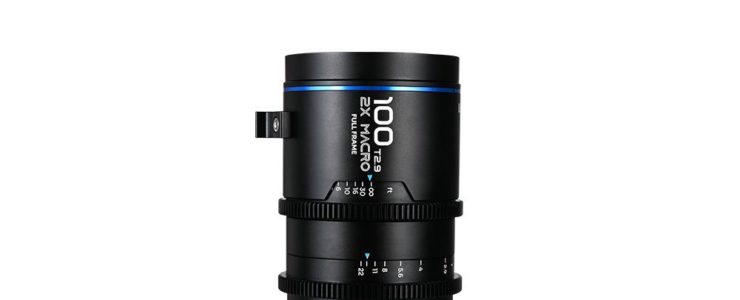
 Laowa 100mm T2.9 2X Macro APO Cine