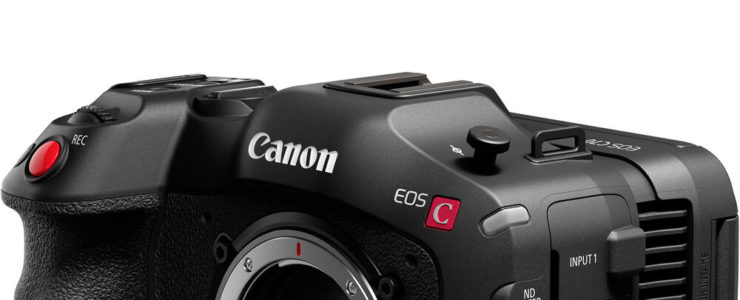
Canon EOS C70 firmware 1.0.4.1 incorporates the following fix:
1. Fixes an issue, in which, in rare instances, the camera cannot be normally operated when operating the REC button with the camera set to the [Continuous Recording] function.
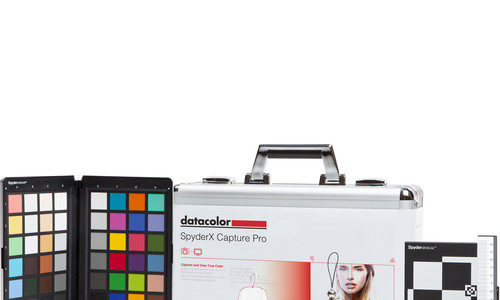
Only for today (9/22/2022) B&H Photo has a 50% discount on the Datacolor SpyderX Capture Pro. Every photographer needs a calibration tool, here is a good one with a solid discount.
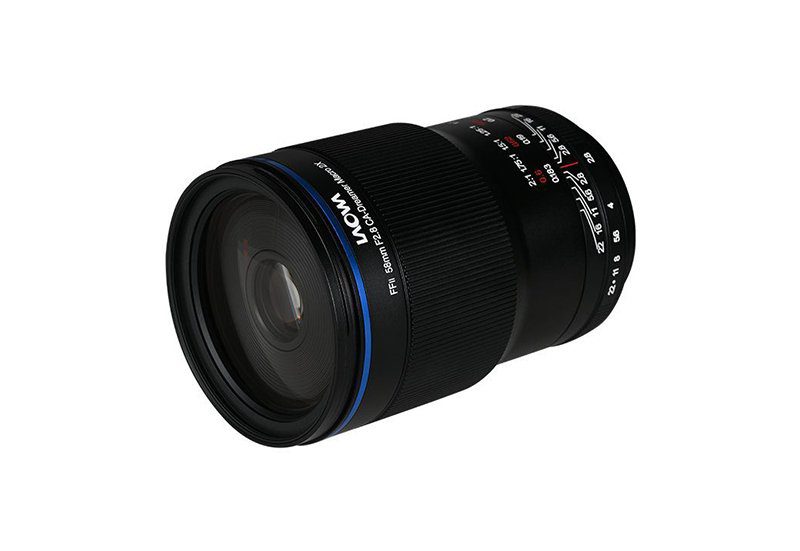
Anhui China, 22 September, 2022 – Venus Optics, the lens manufacturer that has been always endeavouring to invent unique lenses, is stoked to release the Laowa 58mm f/2.8 2x Ultra-Macro APO. This mirrorless-designed macro lens offers a 40.9° angle of view on full frame sensors. And like many other Laowa macro lenses, it can focus from 2:1 magnification to infinity which makes it suitable for professional macro, portrait or a walk-around lens. It features an apochromatic (APO) design that chromatic aberration is compressed to the minimum. With 3 ED elements and 3 Ultra-High Refractive Index elements, the lens delivers an outstanding sharpness. Despite its metal housing, the lens only weighs 595g which is extremely portable. It comes with 4 mount options: Sony E / Canon R / Nikon Z / L mount and a price of USD499.
Up to 2x magnification
This new 58mm lens has the capability to focus from 2X magnification to infinity. The minimum focusing distance is 7.29” (18.5cm). Giving you more flexibility in subject selection. From tiny ant to larger dragonfly, you can capture it with one single lens.
More than a macro lens
Being able to focus infinity, the 58mm focal length (40.9° AoV) pair with the f/2.8 aperture give the lens more usage than just a macro lens. You can also use it for portrait, product photography or use as walk-around lens.
Apochromat (APO) design
The lens is engineered to suppress both longitudinal and lateral chromatic aberration across in-focus & out-of-focus areas. Purple fringing and ghosting are controlled to the minimum throughout the aperture range. The APO design greatly reduces your post-editing time substantially especially in macro photography.
Outstanding sharpness and image quality
Specially designed for mirrorless system, the lens packed 3 ED elements and 3 Ultra-High Refractive Index elements. With a shorter flange distance, it is not only improving the image sharpness but also makes the lens more compact. It brings you a whole new macro shooting experience.
Deeper depth of field
The shorter focal length relative to 100mm would give greater depth of field. You can get more in-focus details from your subject under the same aperture. This gives you more control when creating unique visual narratives.
Smooth and Pleasant Bokeh
The 13 aperture blades would create smooth and pleasing bokeh. A stunning background can easily achieve.
Compact size
This lens weighs only 595g with the dimensions of Ø74 x 117mm, making it much smaller than other main-stream option in the market. You can carry it around without burden.
Internal Focusing
The internal focusing design avoids collision of the lens and your subject. It also reduces the chance for dust particles getting into the lens.
A new Canon EOS R1 rumor surfaced, restating things that have already been suggested.
The latest Canon EOS R1 rumor confirms the rumored announcement date in the second half of 2023 and adds that first teasers might start already in Spring 2023. What else? This:
Canon EOS R1 to be the “new resolution king” in Canon’s lineup
Focus on 8K video, looking at the Cinema lineup
New form factor and ergonomics
New features
And that’s all, folks. Stay tuned because there will be more rumors like this one.
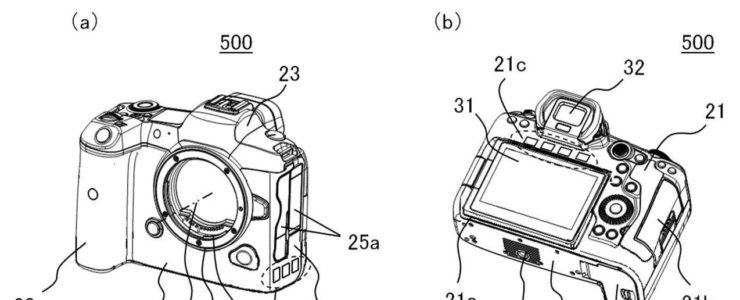
Well, that’s an interesting Canon patent application: an air-cooled heat dissipation system that also functions as IBIS (In Body Image Stabilization).
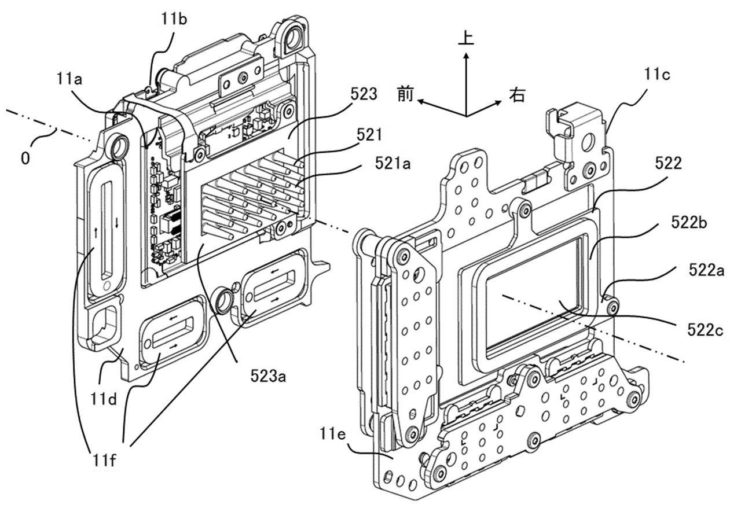
Canon patent application 2022137975 (Japan) discusses methods and technology for an air cooling system that also works for IBIS. How is that achieved? The patent literature describes a cooling method that is very similar to what is done for computer CPUs. Heat dissipation elements are mounted on the back of the imaging sensor, the cooling air passes through these elements. Extract from the patent literature (machine translated):
An imaging apparatus capable of efficiently dissipating heat generated by an imaging element movable in a direction orthogonal to an optical axis is provided.
Description of the Related Art
Conventionally, in order to improve image quality, there has been known an imaging apparatus that optically corrects image blur by moving an imaging device in a direction perpendicular to the optical axis . The image pickup device is required to have sufficient heat dissipation because the heat generated in the image pickup device affects the image quality when driving image blur correction, continuous shooting, moving image shooting, and the like.
In the configuration disclosed in Japanese Patent Laid-Open No. 2002-200013, the amount of heat radiation generated by the imaging element is determined by the thickness and width of the heat radiation sheet connected to the imaging element .
Description of the Related Art
In recent years, the amount of heat generated by an imaging device has increased due to improvements in moving image performance of imaging devices. For this reason, with the configuration disclosed in Patent Document 1, it is difficult to sufficiently dissipate the heat generated by the image pickup device, and there is a possibility that the temperature rise of the image pickup device cannot be eliminated. On the other hand, if the thickness and width of the heat dissipation sheet are increased in order to increase the amount of heat dissipation, the movement load of the imaging element increases .
SUMMARY OF THE INVENTION
Accordingly, it is an object of the present invention to provide an imaging apparatus capable of efficiently dissipating heat generated by an imaging element movable in a direction perpendicular to the optical axis.
Means for Solving the Problems
An imaging apparatus as one aspect of the present invention includes an imaging element section having a fixed unit and a movable unit movable with respect to the fixed unit ; The movable unit has an imaging element and a heat exchange member, and at least part of the heat exchange member is inserted into the duct from an opening of the duct .
Item 521 refers to the heat dissipation elements on the back of the imaging sensor
More Canon patent applications are listed here. Some particularly interesting patent applications we think might get into production are these:
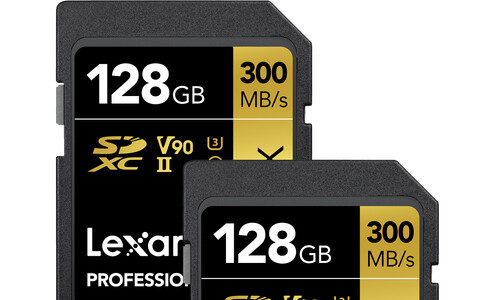
128GB Capacity UHS-II / V90 / U3 / Class 10 Max Read Speed: 300 MB/s Max Write Speed: 260 MB/s Min Write Speed: 90 MB/s Records Full HD, 3D, and 4K Video Can Withstand Extreme Temperatures Built-In Write Protect Switch
1TB Total Storage Capacity USB 3.2 Gen 2 Type-C Up to 1050 MB/s Read Speed Up to 1000 MB/s Write Speed Bus Powered 256-Bit AES Hardware Encryption IP55 Water & Dust Resistance Carabiner Loop for Easy Transport
This website or its third-party tools use cookies, which are necessary to its functioning and required to achieve the purposes illustrated in the cookie policy. If you want to know more or withdraw your consent to all or some of the cookies, please refer to the cookie policy. By closing this banner you agree to the use of cookies.