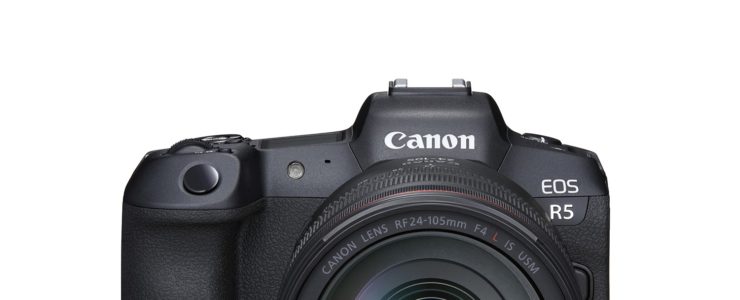
How To Set Up Your Canon EOS R5

canon eos r5 overheating

Wonder how to best set up your brand new Canon EOS R5? Look no further, we have you covered.

At a glance:

  • 45MP Full-Frame CMOS Sensor
  • DIGIC X Image Processor
  • 8K30 Raw and 4K120 10-Bit Internal Video
  • Sensor-Shift 5-Axis Image Stabilization
  • 12 fps Mech. Shutter, 20 fps E. Shutter
  • Dual Pixel CMOS AF II with 1053 Points
  • 0.5″ 5.76m-Dot OLED EVF
  • 3.2″ Vari-Angle Touchscreen LCD
  • Subject Tracking with Deep Learning
  • CFexpress & SD UHS-II Memory Card Slots

Coming from Tyler Stalman, the 12 minutes video below discusses hot to best set up a Canon EOS R5. Enjoy.

More Canon EOS R5 reviews are listed here, for EOS R6 reviews see here. The EOS R5 is highly regarded as a stills camera. In particular, the EOS R5 autofocus system seems to be huge leap forwards. User manual are available for download for the EOS R5 and the EOS R6.

Canon EOS R5: [shoplist 62744]

Click here to open the rest of the article

Camera News: Fujifilm Annnounces New Mirrorless Flagship FUJIFILM X-H2S

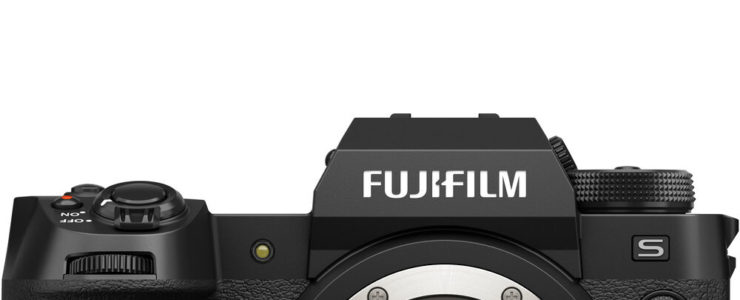
FUJIFILM X-H2S

Fujifilm announced a new flagship mirrorless camera today, the FUJIFILM X-H2S.

At a glance:

  • 26.1MP APS-C X-Trans Stacked BSI Sensor
  • 4K 120p, 6.2K 30p, FHD 240p 10-Bit Video
  • Internal ProRes 422 HQ and F-Log 2
  • 7-Stop In-Body Image Stabilization
  • 5.76m-Dot OLED Electronic Viewfinder
  • 3″ 1.62m-Dot Vari-Angle Touchscreen LCD
  • 40 fps E. Shutter, 15 fps Mech. Shutter
  • 425-Pt. Hybrid AF, AI Subject Detection
  • ProRes & Blackmagic RAW via HDMI
  • CFexpress Type B & SD UHS-II Card Slots

Fujifilm announced the FUJIFILM X-H2S, the company’s latest flagship mirrorless camera. Preorders are available starting at $2,499: B&H Photo | Adorama

Fujifilm press release:

Fujifilm Introduces X-H2S Mirrorless Digital Camera

New flagship camera features enhanced still and video capabilities

May 31, 2022

Valhalla, N.Y. – FUJIFILM North America Corporation today announced the launch of its next flagship X Series mirrorless digital camera, FUJIFILM X-H2S (X-H2S). The most advanced X Series mirrorless camera yet, X-H2S includes advanced features for both still photography and video. It is also the first APS-C digital camera of its kind to feature Fujifilm’s 26.16MP X-TransTM CMOS 5 HS imaging sensor, a stacked, back-side illuminated imaging sensor with a signal reading speed up to four times faster than Fujifilm’s previous X-TransTM CMOS 41.  

X-Trans™ CMOS 5, combined with the newly minted X-Processor 5 (which doubles the camera’s processing power compared to X-Processor 4), greatly enhances overall image fidelity at lower ISOs and reduces noise at higher ISOs. Subject-detection AF, which maximizes the tracking speed and accuracy of moving subjects, is now made possible through the incorporation of an AI processor. 

For video, X-Processor 5 enables the recording of 10-bit 4:2:2 video in resolutions up to 6.2K/30P and frame rates as fast as 4K/120P and FHD/240p. Support for professional codecs, like Apple ProRes HQ/ Pro Res 422/ Pro Res LT, provide incredible flexibility within post-production workflows, while also minimizing power consumption, thereby extending the camera’s maximum video recording time up to 240 minutes.

“The universal reaction to X-H2S has been, ‘This is exactly what I’ve been waiting for!’ The overwhelmingly enthusiastic response reinforces my belief that X-H2S will be the versatile, hybrid digital camera that can meet the diverse needs of photographers and motion production professionals,” said Victor Ha, vice president, Electronic Imaging and Optical Devices Divisions, FUJIFILM North America Corporation. “It’s fun to see so much enthusiasm for this camera, especially since the features it has aren’t normally found at a price point of only $2499.95.”

With these sensor and processor updates, X-H2S achieves substantial performance improvement over other digital camera models on the market, including:

●    Major boost to burst mode capability: X-H2S can apply AF / AE tracking in blackout-free continuous shooting conditions of up to 40 frames per second2, and can create over 1,000 frames continuously with the high-speed burst shooting mode set to 30 frames per second (JPEG) or 20 frames per second (RAW)3

●    Dramatically evolved autofocus (AF) performance: X-H2S’s high number of AF calculations performed per second improves overall AF accuracy and facilitates subject-detection AF. Developed with Deep Learning technology, subject-detection AF implements an advanced prediction algorithm to enhance the performance of Zone AF, by refining the camera’s ability to track moving subjects in low-contrast environments. Subject detection and tracking has also been expanded from the human face and eyes to now include animals, birds, cars, motorcycles, bicycles, airplanes and trains. X-H2S keeps targeted subjects consistently in focus, allowing users to concentrate on framing and critical image-making opportunities.

●    Exceptional video performance: X-H2S digital camera supports internal recording of 4:2:2, 10-bit Apple ProRes HQ/ ProRes 422/ ProRes LT and ProRes 422 Proxy at resolutions of up to 6.2K/30P and 4:2:2, 10-bit h.265 video in frame rates as fast as 4K/120P and FHD/ 240p. The sensor’s readout speed of 1/180 seconds when recording video further assists in minimizing rolling shutter effects on moving subjects, or when the camera itself is moving. A heat-dissipating design brings the 4K/60P continuous video recording time to approximately 240 minutes, while the optional FAN-001 cooling fan accessory assists with maintaining similar levels of performance in high-temperature conditions.

●    Significant flexibility for external recording: X-H2S is the first X Series digital camera to contain F-Log2, which provides a dynamic range of up to 14+ stops, allowing for more creative possibilities both in production and post-production workflows.

Click here to open the rest of the article

Today Only: Venus Optics Laowa 24mm f/14 Probe Lens – $1279 (reg. $1599)

laowa 24mm f/14

Only for today (May 31, 2022) B&H Photo has a 20% discount on the Venus Optics Laowa 24mm f/14 Probe Lens for Canon EF mount.

At a glance:

  • EF-Mount Lens/Full-Frame Format
  • Aperture Range: f/14 to f/40
  • Two Extra-Low Dispersion Elements
  • One Extra Refractive Index Element
  • Magnification: 2:1 to Infinity
  • Min. Focus: 1.5′; Working Distance: 0.8″
  • Long Lens Barrel, Small Front Diameter
  • Built-In LED Ring Light, Micro-USB Power
  • Waterproof Front Lens Barrel
  • Manual Focus Design

Get the Venus Optics Laowa 24mm f/14 Probe Lens for Canon EF mount on sale at $1,279. Compare at $1,500.

More selected deals:

Click here to open the rest of the article

Canon RF 100mm f/2.8L IS Macro Review (great lens with some added weirdness)

RF 100mm f/2.8L Macro IS review

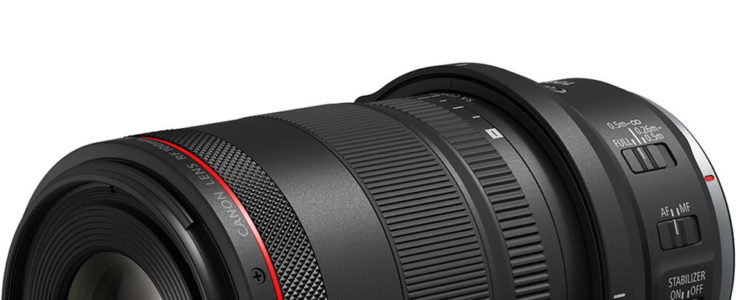
Here is a new Canon RF 100mm f/2.8L IS Macro Review. The Canon RF 100mm f/2.8L IS Macro is a lens getting many positive reviews. A rather interesting lens for any EOS R owner.

At a glance:

  • RF-Mount Lens/Full-Frame Format
  • 1.4x Magnification with Autofocus
  • Aperture Range: f/2.8 to f/32
  • Minimum Focusing Distance: 10.2″
  • Super Spectra Coating
  • Smooth and Quiet Auto Focus
  • Optical Image Stabilization; Hybrid IS
  • Control Ring for Direct Setting Changes
  • 9-Blade Diaphragm
  • Weather-Sealed Construction

The experts at Optical Limits posted their Canon RF 100mm f/2.8L IS Macro review. From their conclusion:

The Canon RF 100mm f/2.8 L USM macro IS is a great lens with some added weirdness. Optically, it is capable of delivering very sharp images straight from f/2.8 – just as you would expect from a moderately fast macro lens. Image distortions are basically negligible even without correction. Lateral CAs are on the low side as well and can be easily corrected anyway. This can’t be said of the raw vignetting which is comparatively high at f/2.8 so auto-correction should remain activated. The quality of the bokeh is generally pleasing with a smooth background blur and nicely rendered highlights. The foreground blur isn’t ideally rendered but that’s usually of lesser concern. Bokeh lovers may also like the SA feature on the lens but, to be honest, for most of us, it’ll remain an oddity that you have to pay for without using it. Maybe video makers can appreciate it more than photographers. That being said – the massive focus-breathing doesn’t help with videos. A bit concerning are the RSAs when stopping down – focus shifts aren’t helpful at very close focus distances. It’s something to keep in mind when shooting at least.

More coverage of this outstanding lens is listed here.

Preorders in USA are open at $1,399: B&H Photo | Adorama. If you are based in UK we recommend Park Cameras. More worldwide preorders: [shoplist 65917]

Click here to open the rest of the article

Canon Patent: 35mm f/2.8, 85mm f/2.8, 130mm f/4 and 220mm f/4 Tilt-shift Lenses

canon patent

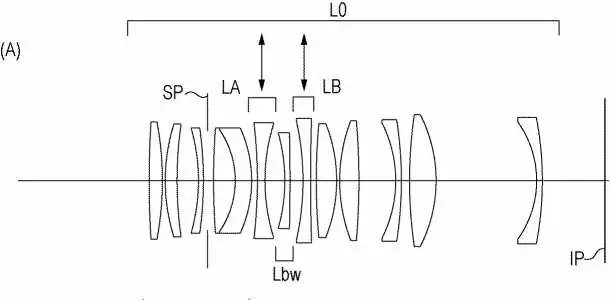
A new Canon patent for tilt-shift lenses with reduced composition shift.

A new Canon patent application discusses optical formulas and methods for tilt-shift lenses with reduced composition shift.

  • 35mm f/2.8
  • 85mm f/2.8
  • 139mm f/4
  • 220mm f/4

From the patent literature:

  • BACKGROUND ART There is a demand for an image pickup optical system capable of obtaining good focus on the entire surface of an object surface tilted in the optical axis direction of the image pickup optical system.
  • Such an imaging application is called tilt photography, and an imaging optical system provided with a tilt mechanism (tilt mechanism) is known as an optical system that satisfies this demand. The Scheimpflug principle is used as the principle of tilt photography, and this imaging optical system is also called a Scheimpflug optical system.
  • On the other hand, in an imaging optical system having a tilt mechanism, the composition shifts (hereinafter, also referred to as “composition shift”) at the time of tilting, which may impair convenience.
  • On the other hand, there is known an imaging optical system provided with a plurality of lens portions that move in a component in the direction perpendicular to the optical axis direction (Patent Document 1). Patent Document 1 describes a lens portion A that generates a tilt effect by moving to a component in the direction perpendicular to the optical axis direction, and a shift effect (composition shift) by moving to a component in the direction perpendicular to the optical axis direction. The lens portion B is provided.
  • In Patent Document 1, the lens unit A moves in the direction perpendicular to the optical axis direction during tilt photographing, and the lens unit B moves with respect to the optical axis direction so as to correct the shift effect generated in the lens unit A. By moving in the vertical direction, tilt shooting with a small composition shift is possible.
  • PROBLEM TO BE SOLVED: To solve an image pickup optical system provided with a plurality of lens portions moving in a direction perpendicular to the optical axis direction as in Patent Document 1, in which the lens portions are perpendicular to the optical axis direction during tilt shooting. Since it is moved in the direction, aberration due to optical eccentricity occurs. This aberration due to eccentricity increases in the amount of vertical movement as the amount of tilt of the object surface to be tilted increases. Therefore, in the image pickup optical system of Patent Document 1, the amount of inclination of the object surface at which good focus can be obtained by tilt photography is small.
  • An object of the present invention is to provide an optical system capable of obtaining a large tilt photographing effect while reducing composition shift, and an image pickup apparatus having the same.

More Canon patent applications are listed here. Some particularly interesting patent applications we think might get into production are these:

[via asobinet]

Canon Patent: 16-160mm f/2-4 Lens For 4/3 Imaging Systems

canon patent

Here is a somehow different Canon patent. Different, because it refers to an imaging sensor standard Canon does not implement, that’s 4/3.

Canon patent application 2020191458 (Japan) discusses optical formulas for a 16-160mm f/2-4 lens for a 4/3 imaging sensor.

PROBLEM TO BE SOLVED: To obtain a zoom lens having high optical performance and an image pickup apparatus having the same while suppressing the increase in size of the entire optical system due to the increase in size of the image pickup element.

There is a demand for a lens having a high magnification ratio while being compact in an imaging optical system used in an imaging device such as a surveillance camera, a network camera, or a video camera using a solid-state image sensor.

In recent years, with the rapid expansion of the surveillance camera market, various demands for lenses for surveillance cameras have been raised. For example, there is a demand for miniaturization from the viewpoint of installability and inconspicuousness, and a demand for high definition and high sensitivity from the viewpoint of using surveillance video data as court evidence.

Example 1

  • Focal length: 16.47-160.13
  • F value: 2.27-4.12
  • Half angle of view: 33.30-3.87
  • Image height: 10.82
  • Overall length: 146.48
  • Back focus: 5.35

More Canon patent applications are listed here. Some particularly interesting patent applications we think might get into production are these:

[via asobinet]