Canon EOS R3 Electronic Viefinder Without Lag And Blackout?

canon eos r3 specifications

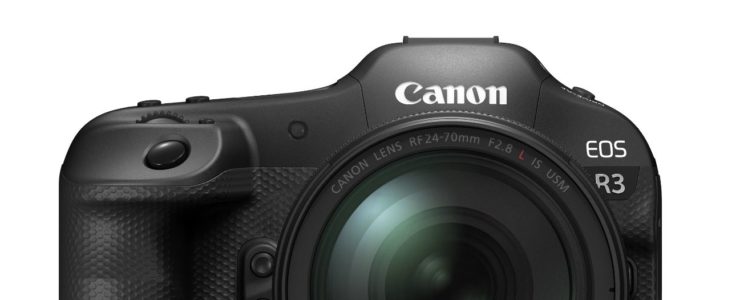
The announcement, or better: the release, of the Canon EOS R3 is getting closer (September 2021). A new bit of information seems to have made it from the Olympics to ours and others inboxes.

The electronic viewfinder (EVF) on the Canon EOS R3 is said to be free of lag and not to have the short “blackout”. A minor annoyance, to be honest. Still something that can make the difference for a professional sport photographer. We think this small bit of information has to come from one of the many photographers that had the chance to use the EOS R3 at the Tokyo Olympics.

The resolution of the upcoming Canon EOS R3 is no longer a mystery. It’s 24MP, and it got more than one confirmation. Oh, and have a look how impressing the 30fps of the R3 are. We expect the announcement in Fall 2021, likely in September. Here is what we know about the EOS R3 so far:

  • 24MP backside illuminated image sensor
  • Multi-Controller & Smart Controller
  • Vari-Angle Touch Screen
  • NEW accessory shoe
  • Wifi 5GHz
  • High speed 30fps electronic shutter with AF/AE tracking + RAW shooting at this speed
  • AF down to -7.0 EV
  • 8 Stops Coordinated Control IS with Optical IS and In-Body IS
  • 4K Canon Log3​
  • Oversampling 4K
  • Internal RAW video
  • Inclusion of cars and motorbikes in AF tracking technology
  • RAW internal movie recording
  • Speedlite shooting with electronic shutter
  • The same weather sealing as the EOS-1D series
  • LP-E19 Battery
  • Dual card slot SD & CFExpress

All our EOS R3 coverage is listed here, product images are here and here. There has been some discussion about who makes the imaging sensor of the EOS R3. You can get notified when the Canon EOS R3 will be available for preorder.

Canon Patent: Improved IBIS For Shooting HDR Photos

Canon patent

Here we are with another rather interesting Canon patent application: better IBIS (In Body Image Stabilisation) for shooting HDR photos.

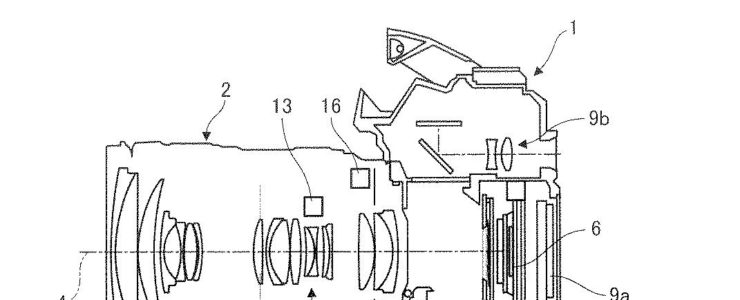
Canon patent application 2021-089387 discusses how to improve IBIS during automatic exposure bracketing, for instance to take HDR pictures. This is to compensate differences between the single images because of movement. From the patent literature:

The present invention relates to a technique for performing a plurality of times of photographing for acquiring images used for image synthesis while suppressing image blurring of an image.

Background of invention:

In the dynamic range expansion processing of an image signal, for example, a plurality of signals having different output conditions are combined to generate a high dynamic range (hereinafter, also referred to as HDR) image signal. In an imaging apparatus, a photographing for synthesizing a plurality of images having different still image exposure periods is known, and is referred to as HDR photographing hereinafter. Since a plurality of photographing operations are performed in HDR photographing, a time required for completing all photographing operations becomes longer than a time required for photographing 1 images.

When HDR photographing is performed by an imaging device having an image blur correction function for correcting image blur of a captured image due to camera shake or the like, HDR photographing is possible while performing image blur correction. In this case, since it is necessary to perform image blur correction for a long time, a limit of a correction range related to an image blur correction lens (hereinafter, also referred to as a correction lens) becomes a problem. In other words, when the drive control of the correction lens in the imaging optical system is performed on the basis of a detection signal such as camera shake, it is impossible to perform the image blur correction beyond the movable range of the correction lens. Thus, when the image blur correction amount reaches the limit of the movable range (correction stroke limit), no further image blur correction effect is obtained.
[0004]

More Canon patents are listed here. Some particularly interesting patent applications we think might get into production are these:

Canon RF 28-70 f/2L Review – How Good Is This Lens?

Canon RF 28-70mm f/2L review rf mount canon eos r

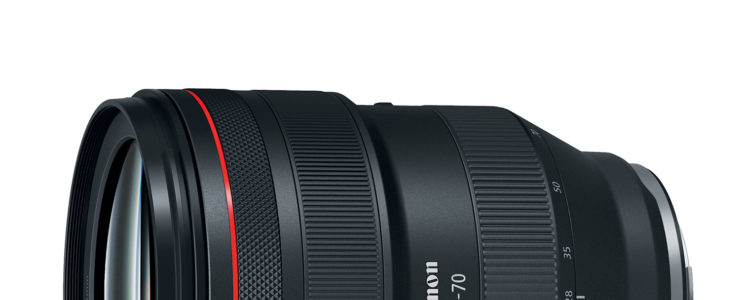
The Canon RF 28-70 f/2L lens for the EOS R full frame mirrorless system is a great lens. And heavy and expensive too.

At a glance:

  • RF-Mount Lens/Full-Frame Format
  • Aperture Range: f/2 to f/22
  • Ultra-Low Dispersion Elements
  • Ring-Type Ultrasonic Motor AF System
  • Customizable Control Ring
  • Rounded 9-Blade Diaphragm

DPReview TV wants to know how good the Canon RF 28-70 f/2L is, and for whom it is best suited for. It’s a quite the performer and comes with a hefty price. Enjoy.

More Canon RF 28-70mm F/2L stuff is listed here. Others called the RF 28-70mm f/2L a “revolutionary lens“.

Canon RF 28-70mm F/2L: [shopcountry 59413]

Click here to open the rest of the article

Today Only Deal: SanDisk 128GB Ultra SDXC UHS-I Memory Card – $16.99 (reg. $24.99)

SanDisk 128GB

Rather good deal at B&H DealZone, with a 32% instant discount on the SanDisk 128GB Ultra SDXC UHS-I Memory Card.

At a glance:

  • 128GB Storage Capacity
  • UHS-I / Class 10 / U1
  • Max Read Speed: 100 MB/s
  • Min Write Speed: 10 MB/s
  • Records Full HD Video
  • Records Raw and JPEG Photos
  • Water / Shock / X-Ray Proof
  • Temperature Proof
  • Built-In Write-Protect Switch

Get the SanDisk 128GB Ultra SDXC UHS-I Memory Card on sale at $16.99. Compare at $24.99.


Hand-picked deals are listed here.

Deal pages:

Refurbished lenses and DSLRs at Canon Store (best deals might be found here)

Save $10 on Luminar 4 and/or Aurora HDR 2019 using our code “WATCH” at checkout.

Click here to open the rest of the article

Canon Patent: More RF mount lenses, RF 27mm f/1.4 And RF 35mm f/1.4

canon patent

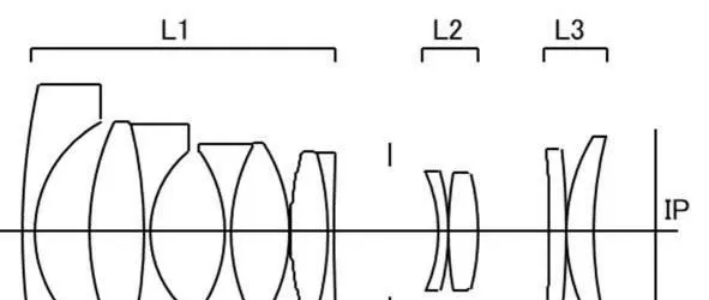
And yet another Canon patent for RF-mount lenses spotted by asobinet.com. An RF 27mm f/1.4 and an RF 35mm f/1.4.

From the patent abstract:

In recent years, image pickup devices such as digital still cameras, video cameras, surveillance cameras, broadcasting cameras, and silver halide photography cameras using a solid-state image sensor have become more sophisticated. As an optical system used for this, the entire focus group is required to be miniaturized. Further, there is a demand for an optical system capable of satisfactorily correcting chromatic aberration, curvature of field, etc. at the time of shooting at the nearest distance while increasing the shooting magnification when focusing from infinity to the nearest distance. Further, with the shift to mirrorless large format cameras, there is a demand for a lens having a short back focus, a small size, and a large aperture. As an optical system that satisfies these requirements, a lens group having a positive refractive power, a focus lens group having a positive refractive power, and a focus lens group having a positive refractive power, which are arranged in order from the object side to the image side, are used.

It seems keeping thing small and light-weighted is a major topic in Canon’s R&D department.

Optical formulas for the 27mm lens:

Example 1

  • Focal length 26.79
  • F number 1.44
  • Half angle of view (°) 38.93
  • Image height 21.64
  • Lens overall length 134.78
  • BF 13.00

Example 2

  • Focal length 26.62
  • F number 1.44
  • Half angle of view (°) 39.10
  • Image height 21.64
  • Lens overall length 131.96
  • BF 20.00

Example 5

  • Focal length 26.70
  • F number 1.44
  • Half angle of view (°) 39.02
  • Image height 21.64
  • Lens overall length 133.24
  • BF 20.00

Optical formulas for the 35mm lens:

Example 3

  • Focal length 33.73
  • F number 1.44
  • Half angle of view (°) 32.68
  • Image height 21.64
  • Lens overall length 143.92
  • BF 20.00

Example 4

  • Focal length 33.87
  • F number 1.44
  • Half angle of view (°) 32.57
  • Image height 21.64
  • Lens overall length 131.26
  • BF 16.49

Canon Patent Shows What Might Be The Canon EOS R1 (with special grip)

canon eos r1

Here is a very interesting patent. It describes a special, ergonomic grip on a camera that might well be the Canon EOS R1 flagship mirrorless camera. Oh, and don’t get fooled: the patent was spotted by asobinet.com. Edit: as reader Ross E. Forp correctly states in the comment section, it might also be the Canon EOS R5c.

From the patent application abstract:

To secure good grip in any of a horizontal position and a vertical position, and to perform imaging without a risk of dropping the device when changing from a vertical position to a horizontal position or from a horizontal position to a vertical position.

The special grip has the function to allow to hold the camera more firmly.

the shape of the grip is very special, and it seems that good handling is realized despite the thin design by opening a cavity in the camera

But there is more. The camera depicted in the patent drawings seems to have intake and exhaust openings that could point to an active cooling system (120a and 120b in the drawings). However, the patent literature appears to describe them as toiuch sensor (some kind of touch bar?).

asobinet.com made a quick size comparison with the EOS R3, and it shows the camera in the patent is bigger.

Image courtesy of asobinet.com

What do you think, is this the Canon EOS R1?